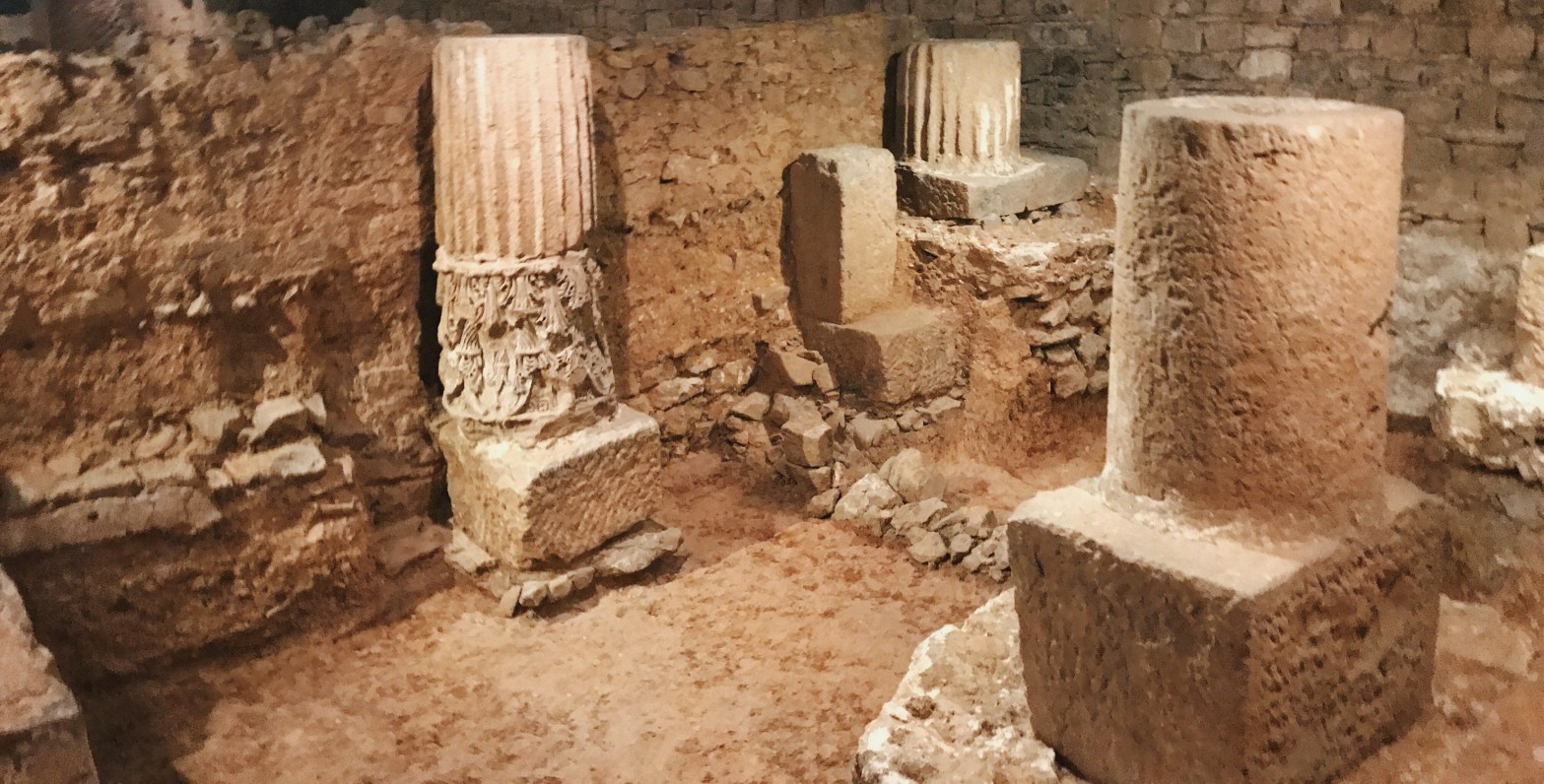
As we toured the Roman ruins, we came across many engineering feats that have influenced Catalan architecture today. The Roman city was enclosed by large walls and towers in order to protect the inhabitants. The only wall that can be seen today remains inside the museum, but there are many others that have been incorporated into current Catalan buildings. In contrast, Cataluyna today doesn’t have a wall separating itself due to large population growth and little necessity for protection. The sewer system and public baths seen in the Roman remains displayed the public Roman water system and how it was accessible to all. After the dark ages, water became privatized and remains that way in Cataluyna today. Although the sewage systems are not public like they were in the Roman city, they still use a lot of the structure and systematic ideas from that time. A lot of Cataluynan roads are still in the same locations as the Romans placed them. The Romans created the intervallum, the main inside road, that allowed the Roman guards to protect the city. This concept of main roads is now used in Catalunya to aid easy transportation.
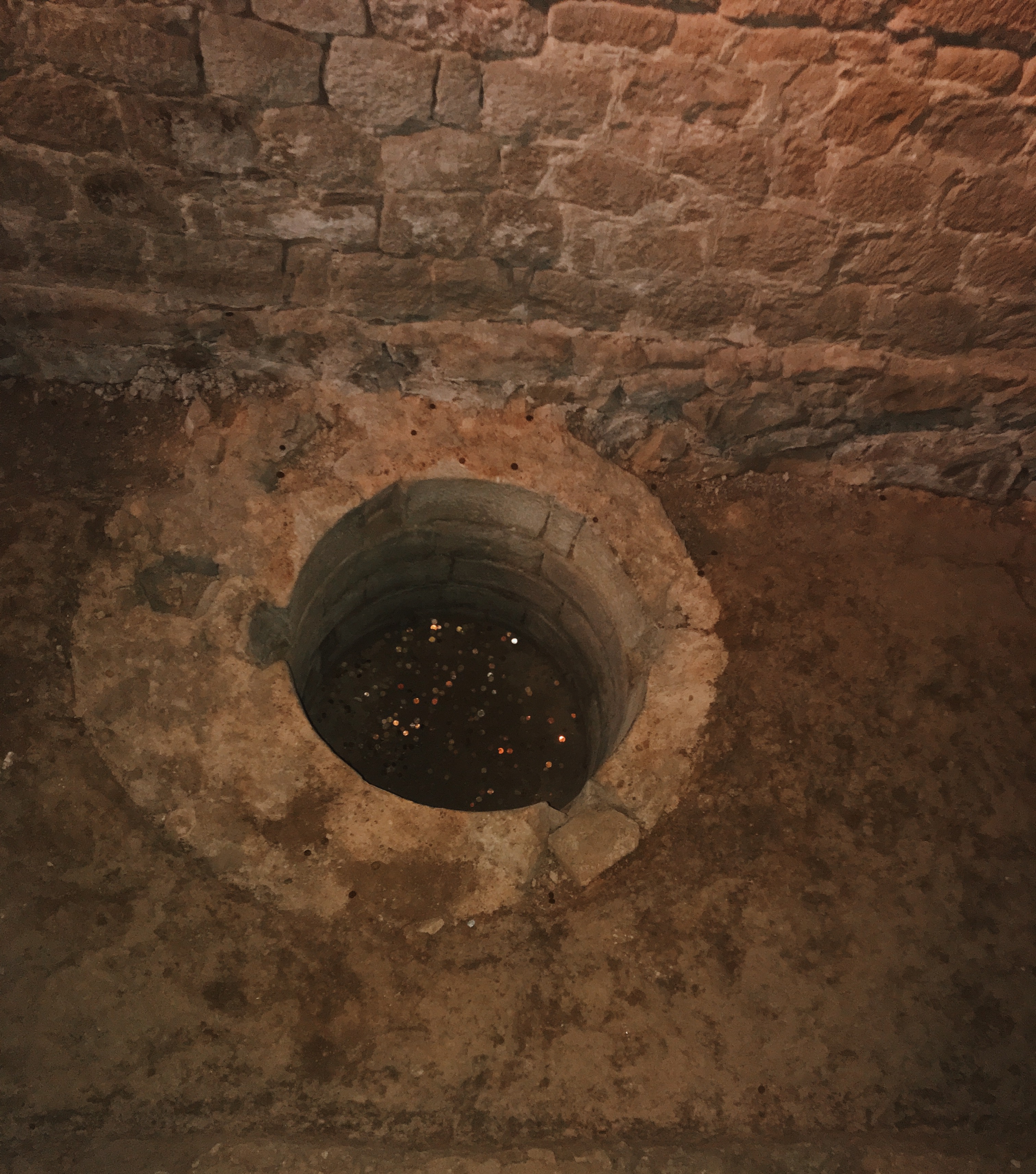
Roman well with public water 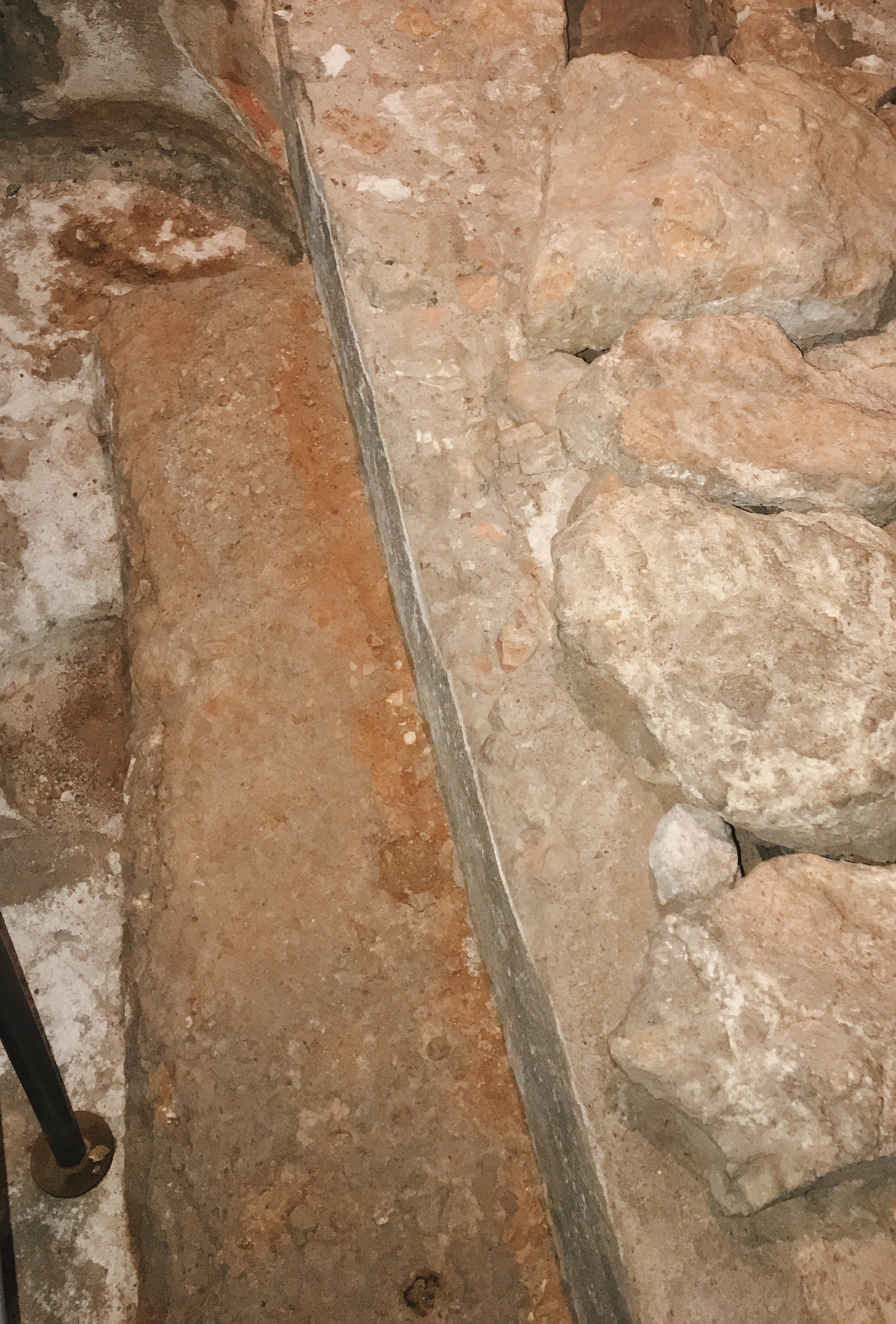
Roman sewer system 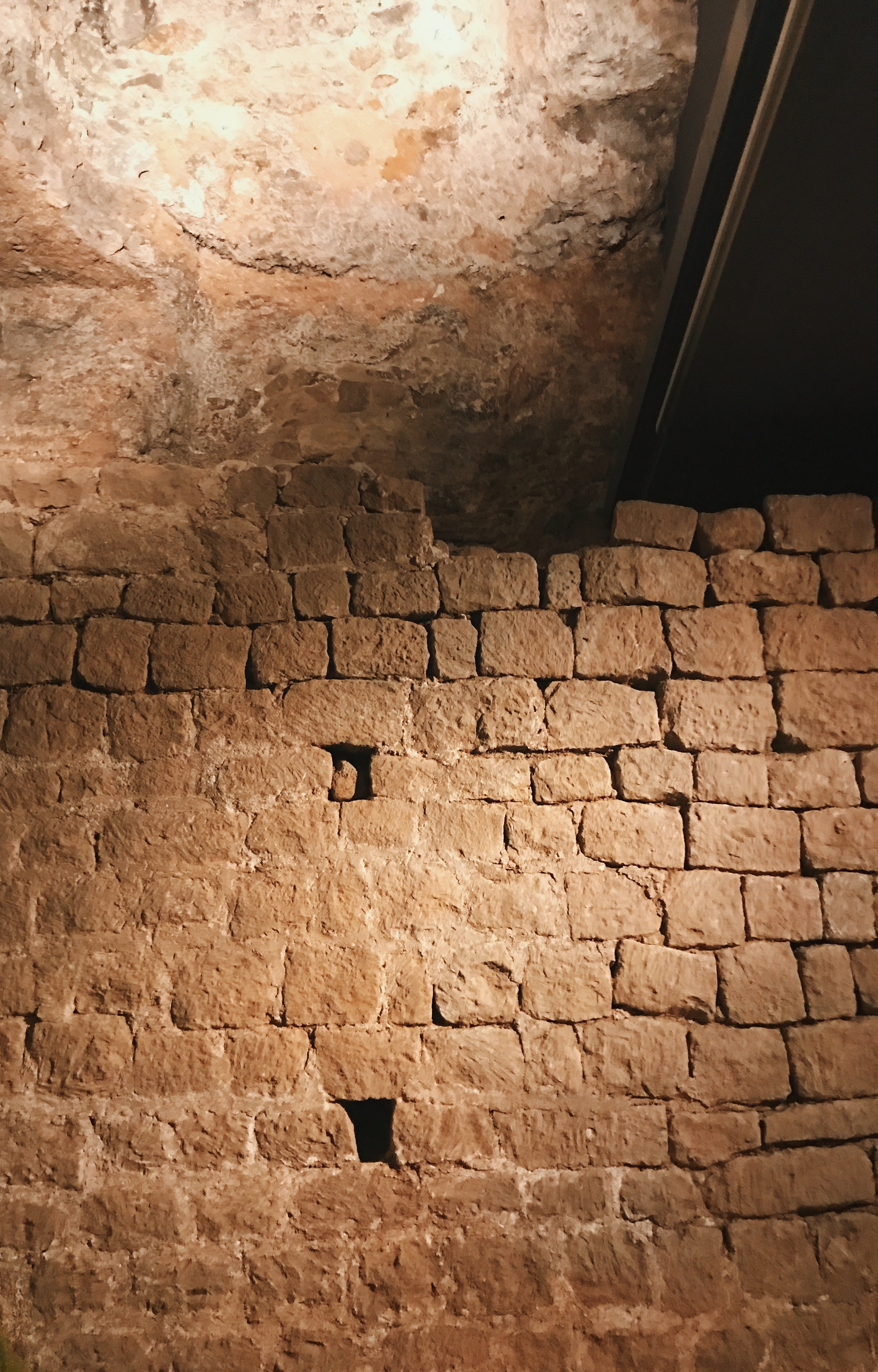
The last Roman wall that can be seen in the Museum 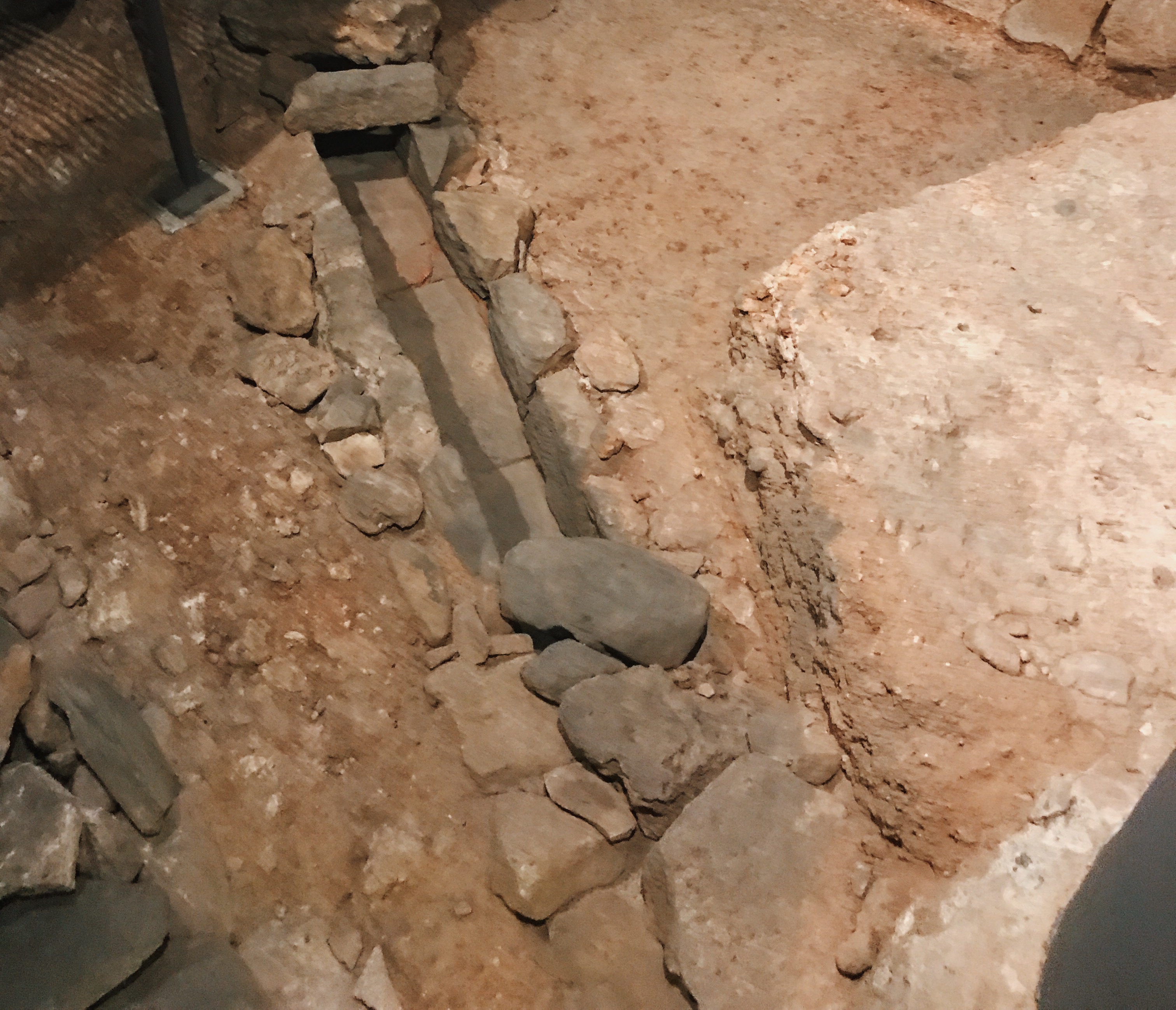
Sewer system 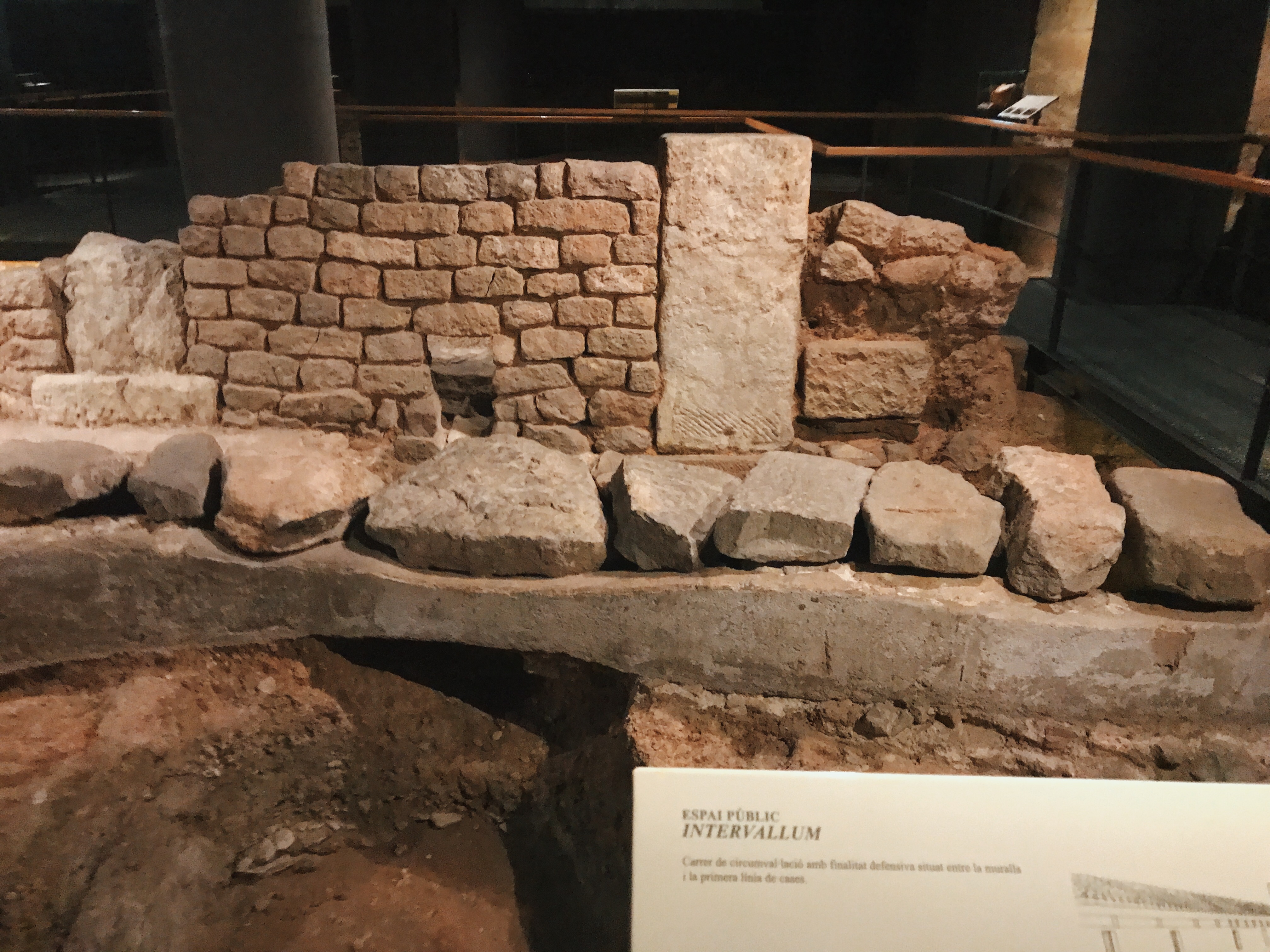
Intervallum
During the Roman Empire, the official religion switched from Polytheism to Monotheism. This change happened gradually as it was difficult for people to switch their beliefs overnight. Due to this difficulty, many people kept practicing their religious traditions but would alter the practice to support the new monotheistic beliefs. An example of this was when Cathedrals were built on top of Roman temples, like the Tarragona Cathedral. The change in religion also caused a major shift due to the underlying values of the monotheistic religion. Christianity had more rigid rules and morals which greatly impacted how the Roman city was operated. During our tour, our guide didn’t point out any religious artifacts, but I was able to see the polytheistic influence on many of the columns and carvings. There were also multiple mosaics that depicted the Roman’s view of gods before the switch to monotheism.
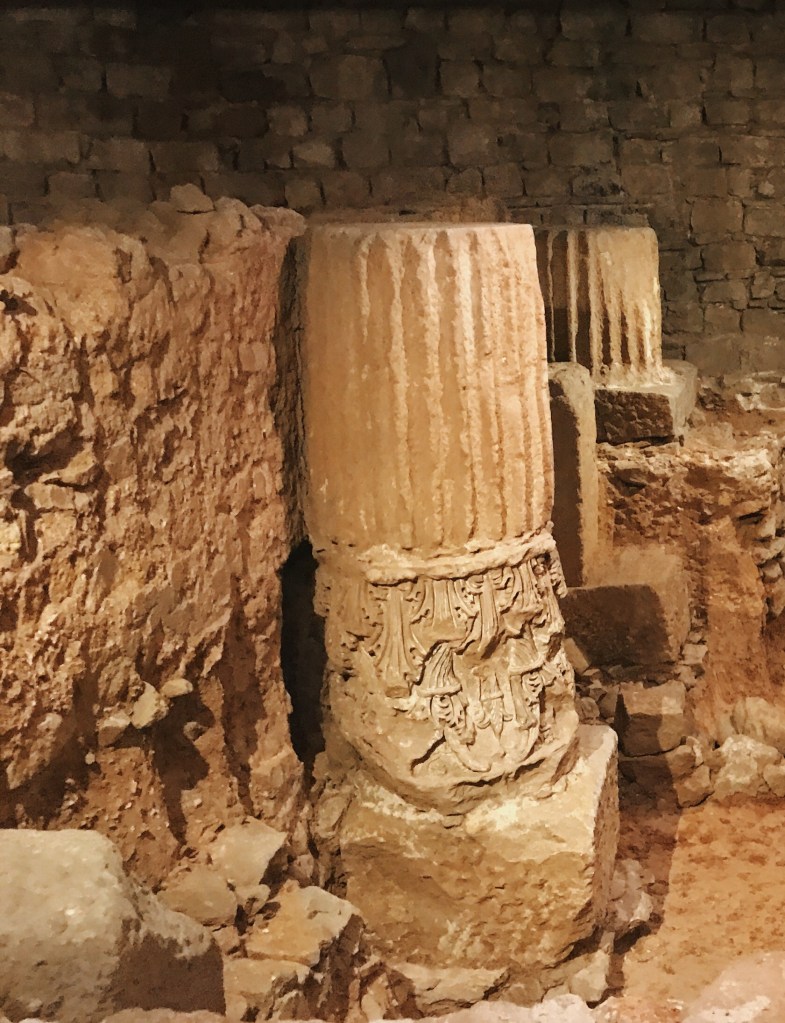
Roman carvings in columns 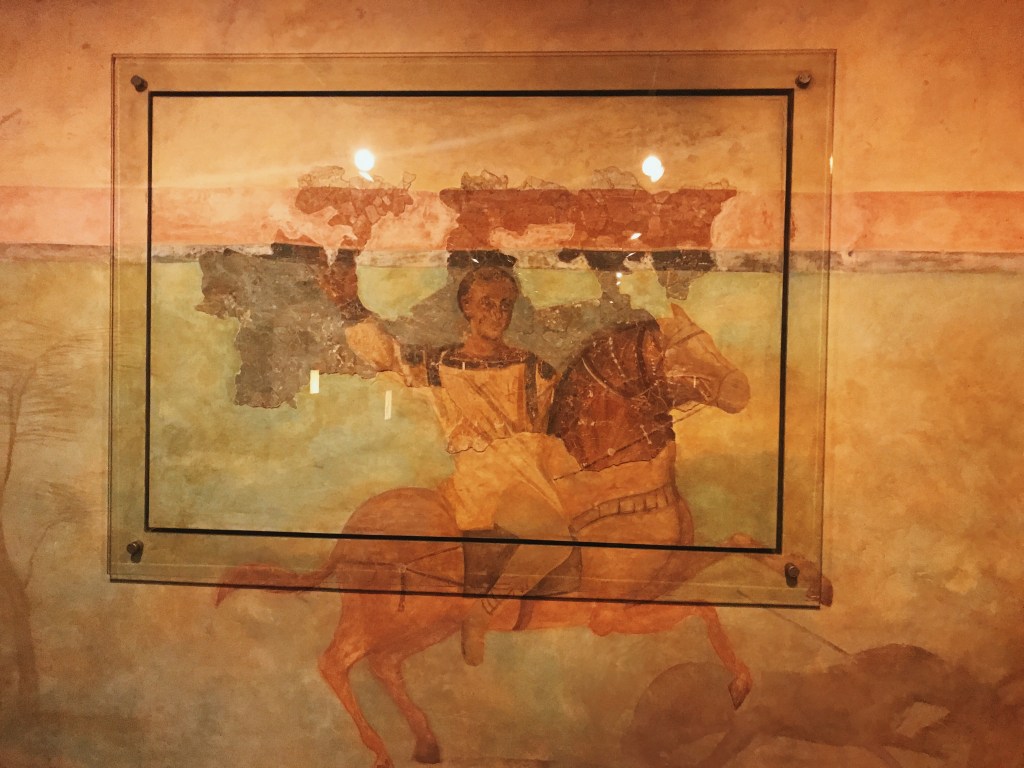
Mosaic depicting a god 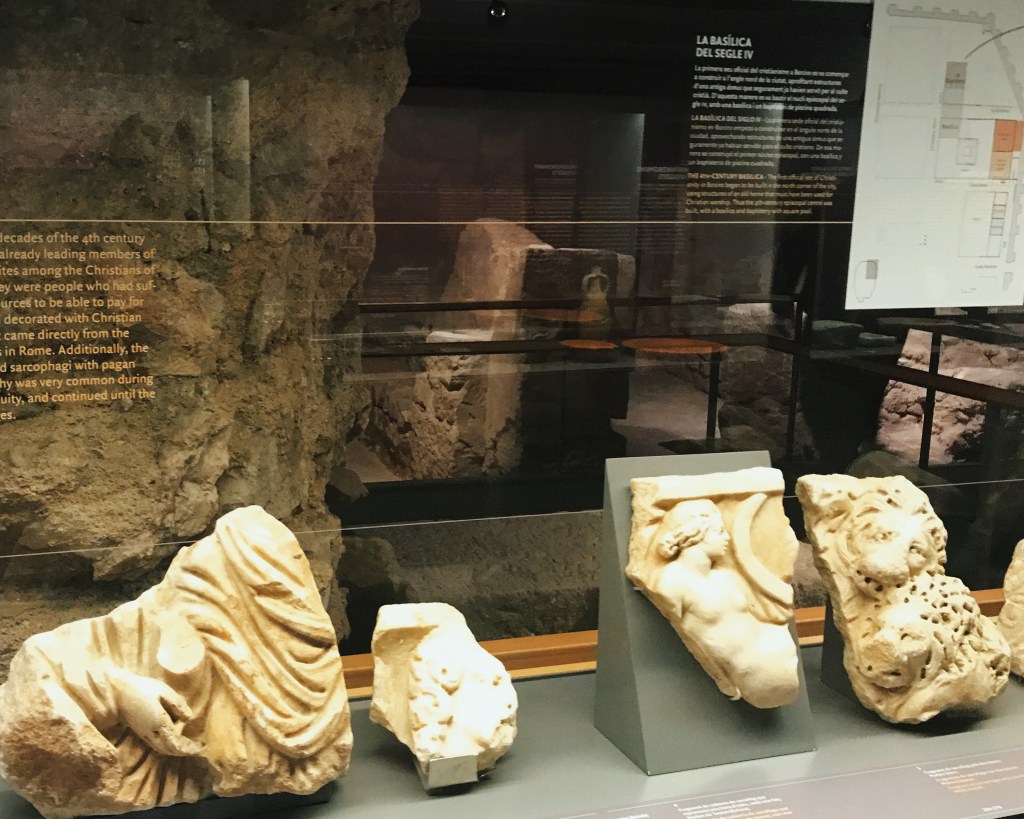
Pieces of Roman carvings of gods
Roman architecture has proved its longevity, as it is still prevalent in Cataluyna and all over the world today. In Cataluyna, there are remains of walls and infrastructure underneath the walls of many Cataluynan buildings. Not only can it be found underneath but also on the façade of buildings erected long after the Roman Empire. For example, Roman influences such as curved archways can be seen in the Parliament building of Cataluyna. Outside of Spain, Roman influences can be seen all the way in Washington, D.C. Roman architecture became a symbol of power and strength and is continually being used in government buildings today. The United States Congress Building uses the wide columns of the Romans to emulate power and strength.
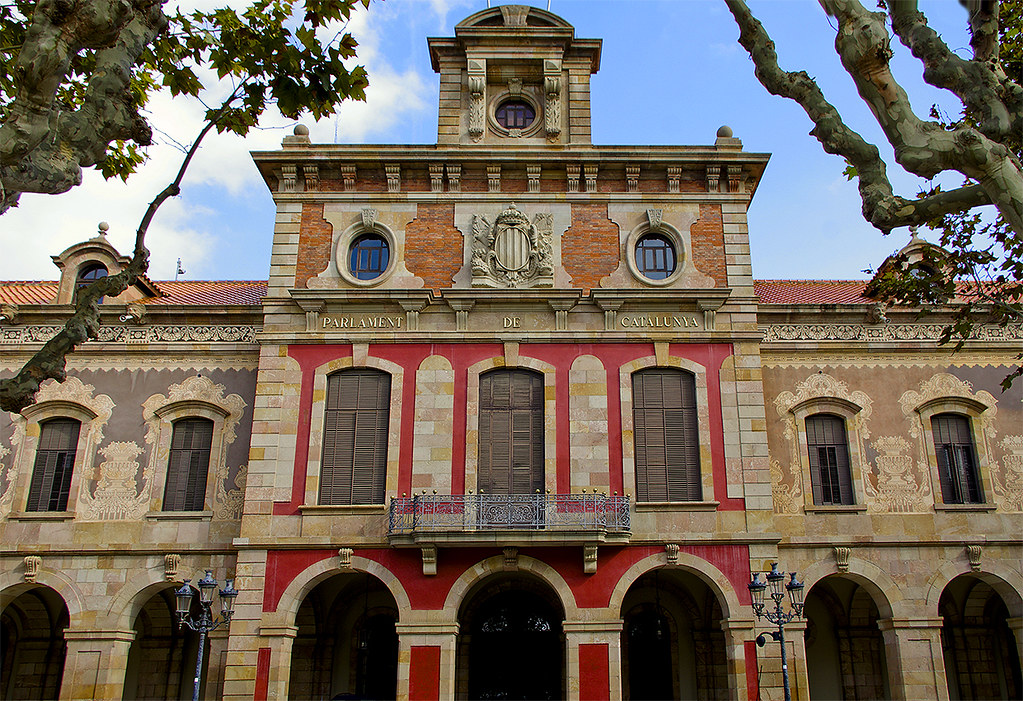
Catalunya Parliament building 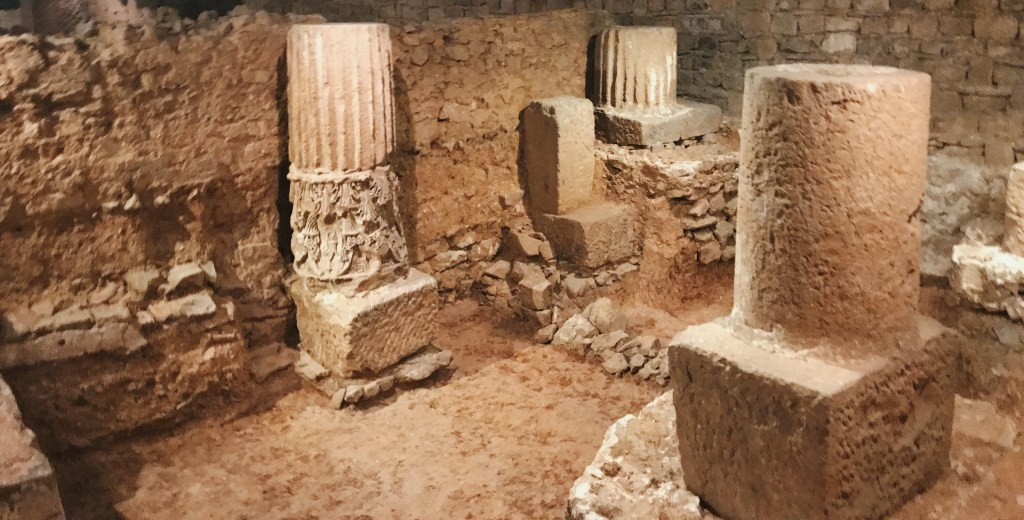
Roman columns 
United States Congress building
While walking through the museum, we came upon a model home of a typical Roman house, or a Domus. Looking through the model home, it was clear to see the home was built for Patricians due to its lavish decorations and atrium-centric layout. The Culina, the Roman kitchen, was attended to by slaves and was usually very small and dark. The Peristylum was an open courtyard within the walls of the Domus. This courtyard was typically surrounded by a covered walkway with pillars. As our tour guide described the features of the Peristylum, I was reminded of the very similar courtyards I had seen on my trip to the Monastery of Santa Maria de Santes Creus. As previously mentioned, the Domus was centered around two atriums. The atriums were filled with Mosaics and had an ipluvium, a shallow pool to catch rain water. Our tour guide spoke of the importance of atriums for the patritions to show their power and welcome guests as they arrived. The Triclinium was a formal living/dining room with three couches around a center table. The pater familias was the oldest male in the household, and the Tablinium served as his office. Only males were allowed to enter this “table” room, and business was usually conducted there. The tablinium reminded me of my father’s office in my home because of the grandeur and centricity of the room. The cubiculas were small but beautifully decorated, in contrast to the slave quarters with no decorations. The cubiculas seen in the Dumos were the most interesting to me because there were no windows to the outside. The only two windows in the entire house were located in the slave cubiculas. Our tour guide explained the lack of windows as a sign of social status so only the partitions who entered, not the suburbiums, could see the inside. This was surprising to me because large windows in United States’ homes are coveted because people want others to see in.
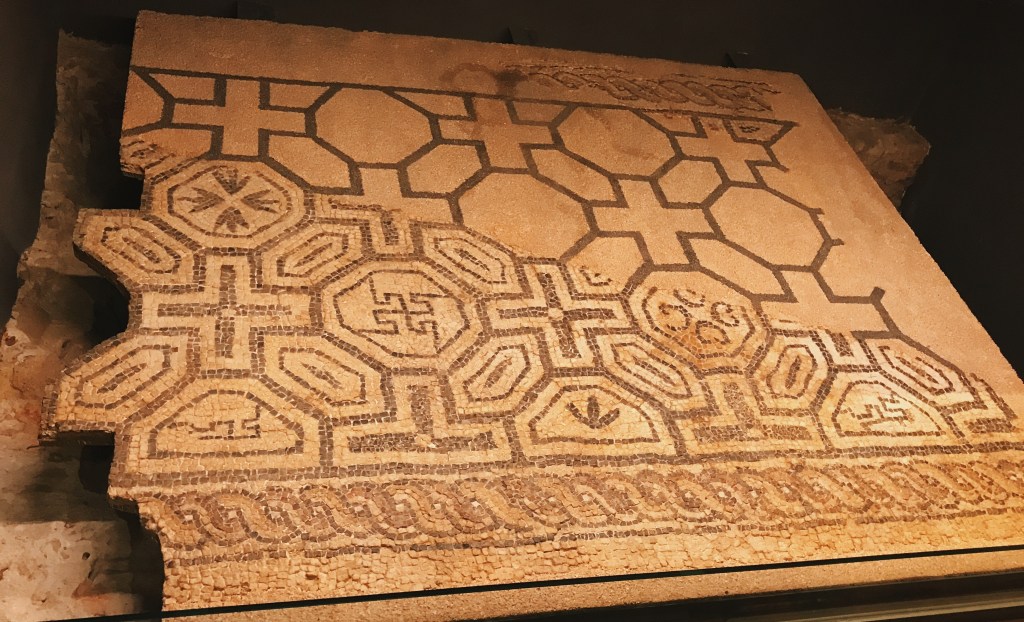
Roman Mosaic 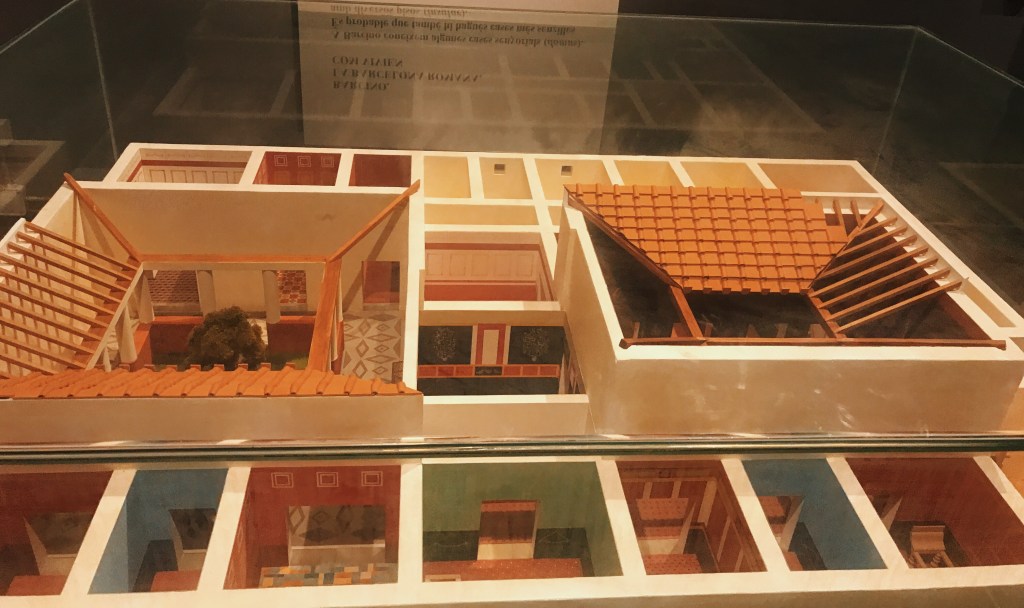
Domus Model 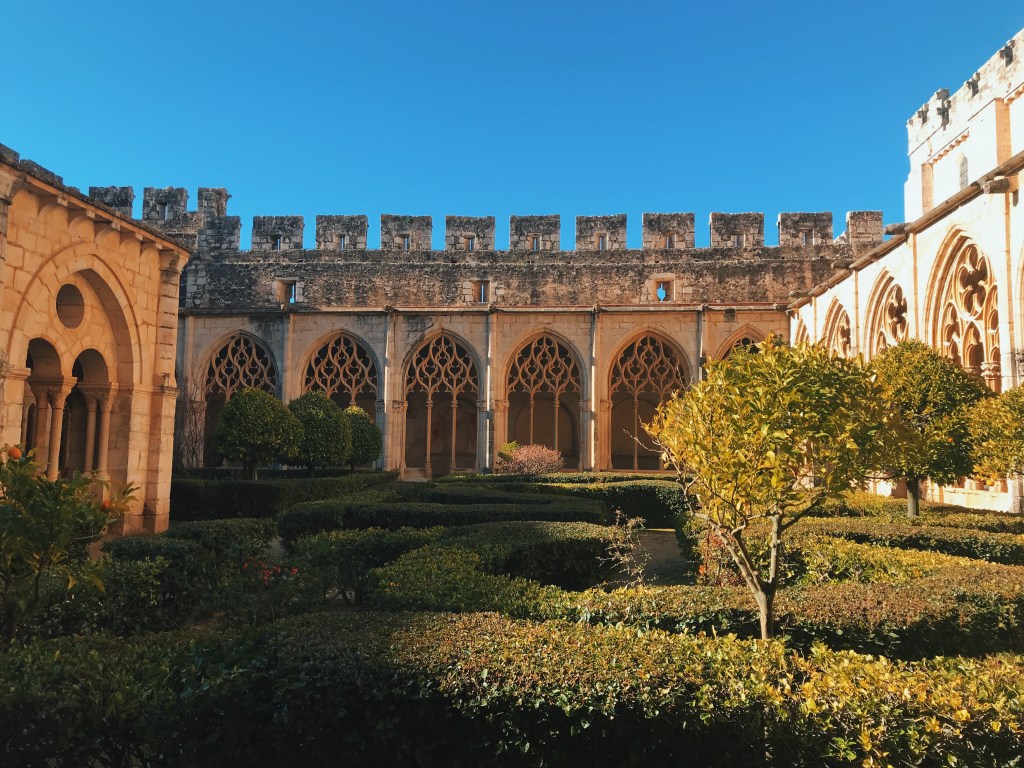
Arches of Santes Cruese
As we walked through the museum, we were able to witness some of the Roman habits characterized by domestic objects. One of the artifacts was a Roman laundry pool. This pool was filled with water and then with the Romans’ clothes. The soap, made up of lime, urine, ashes and water was added to the pool to disinfect the clothing. The laundry pool was operated by public water and slaves, making it very accessible to the Romans. I was surprised by the Roman’s emphasis on cleanliness in order to be a “clean” Christian. We also were able to see domestic objects such as dishes and utensils. These were very similar to what we use today but were made out of clay instead of glass or plastic. During Roman times, dishes were only handled by slaves as they cooked and served meals to the patritions. We also saw the large pots that the Roman’s fermented their Garum sauce in. They would ferment the organs and blood of fish for three months to create the Garum sauce which can still be eaten in multiple places in Cataluyna today.
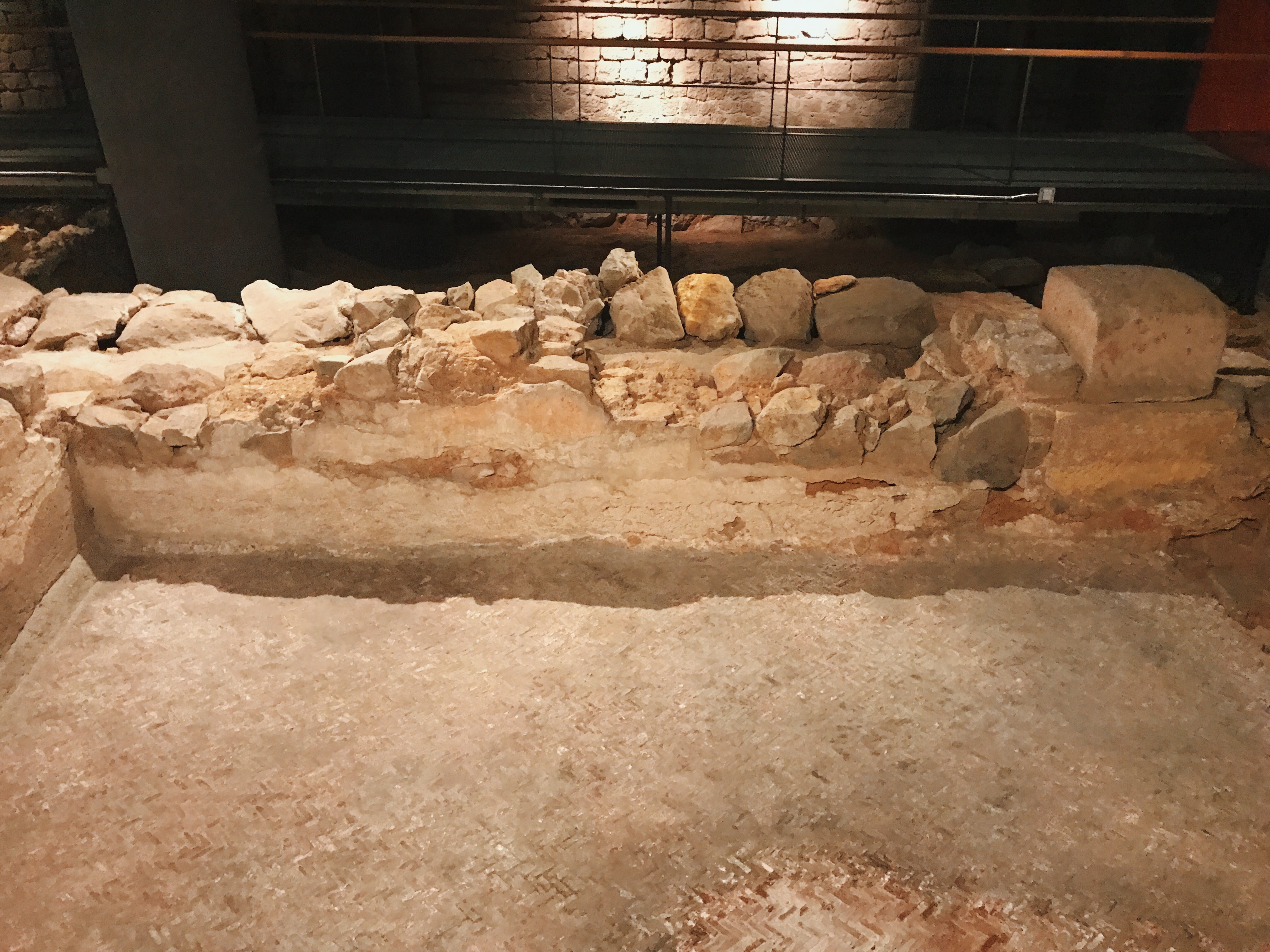
Laundry pool 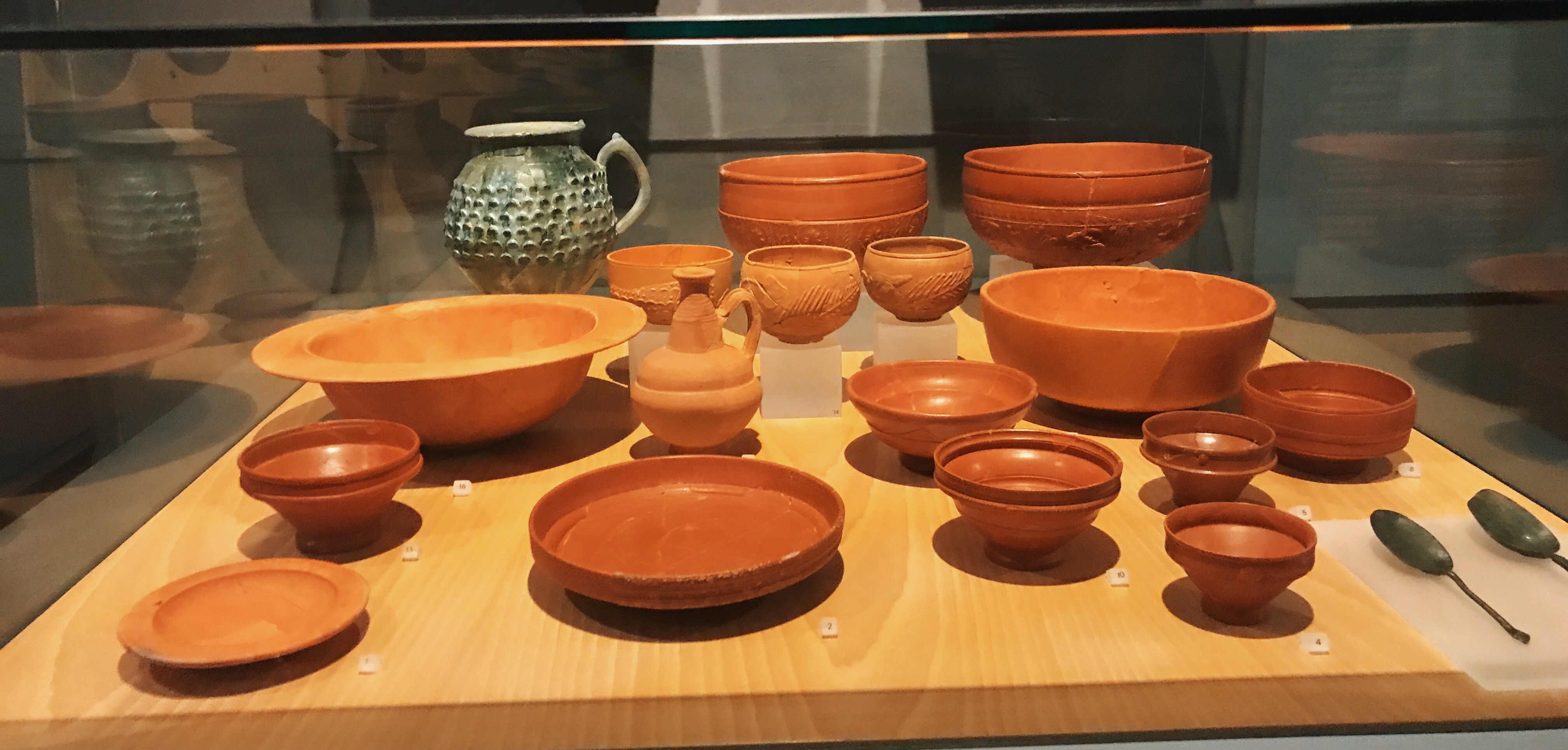
Roman Dishes 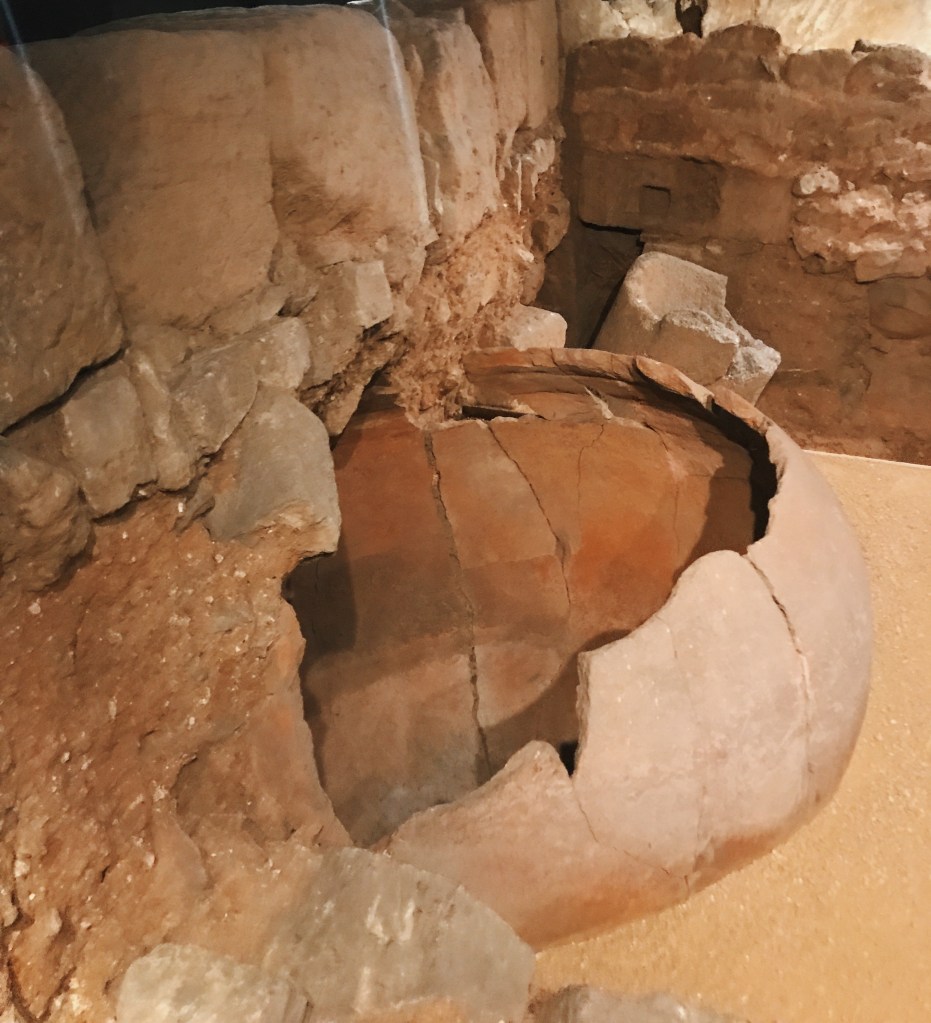
Garum pot
As we walked through the Roman remains in the museum we were able to see the process of the wine fermentation. The wide containers were used for the fermentation process and the Romans would usually wait two months before drinking the wine. Water, honey and sea salt were usually added to help flavor the young wine. Wine was very important in Roman culture and has remained a large part of Catalan culture. Bacchus was the Roman god of wine, making wine of religious importance to the Romans. As the Romans converted from polytheism to Christianity the sacred wine of their gods transferred to being the sacred blood of Jesus Christ. This change of religion upheld the importance of wine in Catalan culture while gradually changing the spiritual meaning over time. Today in Cataluyna, wine is consumed daily in the household but is still cherished and associated with religion. One of the most popular Cataluyan wines is Viña Sol from D.O Penedès. This wine has traditions dating back to the 6th century, having Roman influence. Another great Cataluynan wine is Augusti Torello Mata.
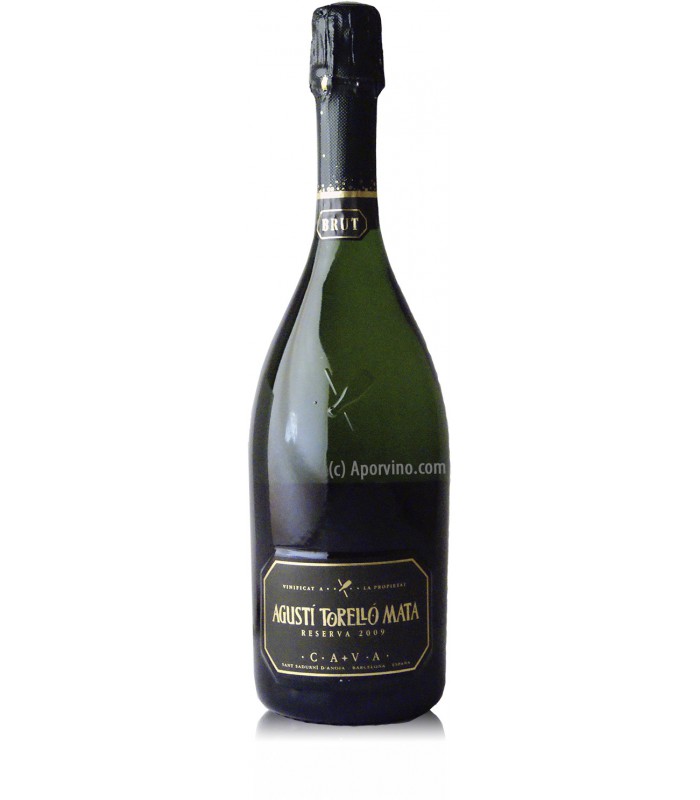
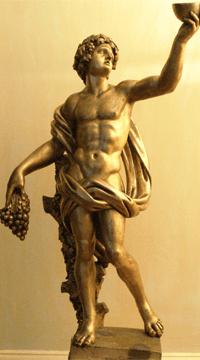
Bocchus- God of Wine 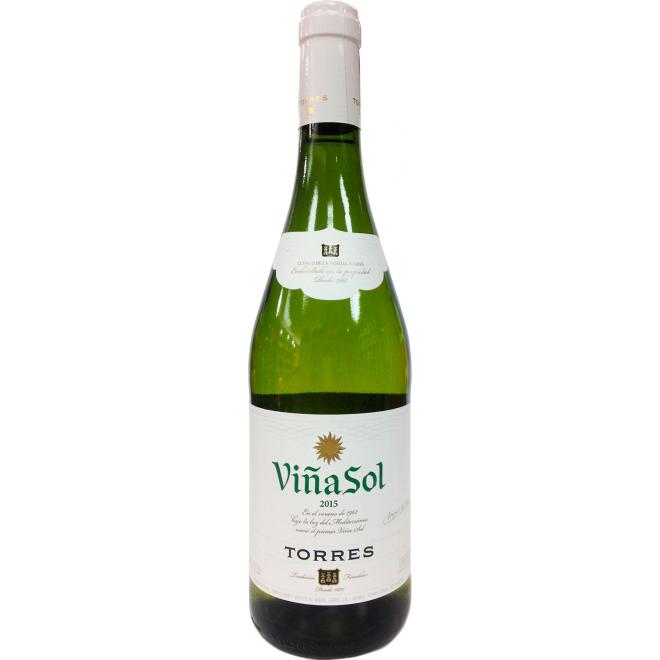
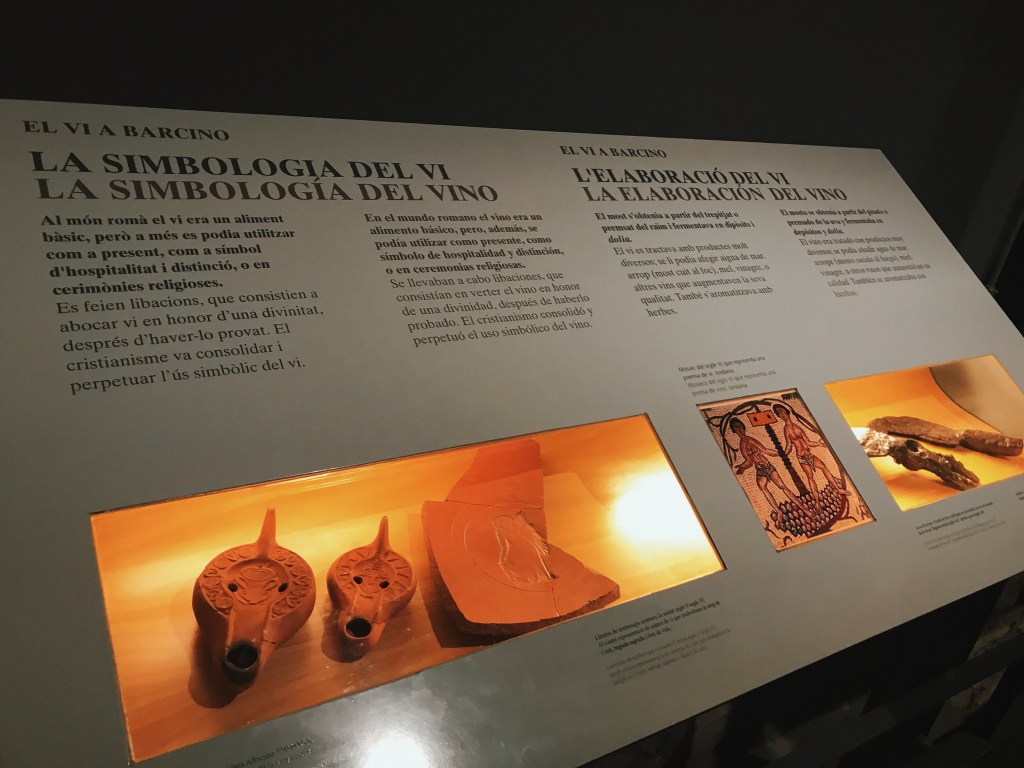
Artifacts of the gods of wine 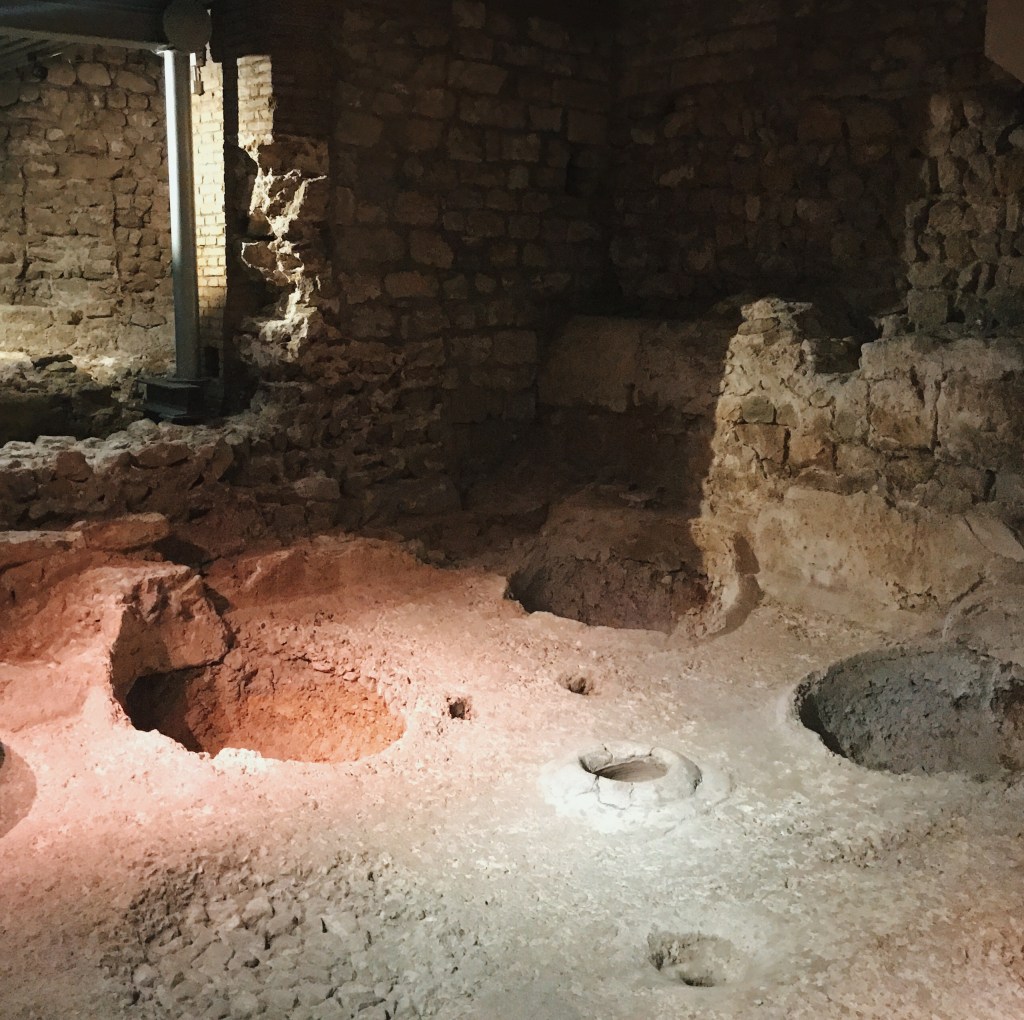
Wine fermentation containers
The arrival of Christianity had a large impact on the culture and architecture of Catalunya. The Visigothic architecture is more ornate than the Roman’s simple and strong architecture. This could be seen as Roman buildings were renovated with more detail and design. As I mentioned before, the change from a polytheistic religion to Christianity affected the morals and principles of Cataluyna as well. The switch to Christianity provided more values and rules for the Catalan people to adhere to. On my trip to Tarragona, I was able to catch a glimpse of Visigothoc influence in the Tarragona Cathedral. After the fall of the Roman Empire, the Visigoths built a cathedral on top of the Roman Cathedral. Some of the detail still remains on the Tarragona cathedral. We also witnessed Visigothoc influence in the first baptism pool at the museum. The Baptism pool was built in the shape of a cross, and the person being baptized would go into the water facing west and come out of the water facing east, also known as “the light” or God. This baptism pool displays clear Visigothic influence on Cataluyna and served as a major player for Cataluynan religion moving forward.
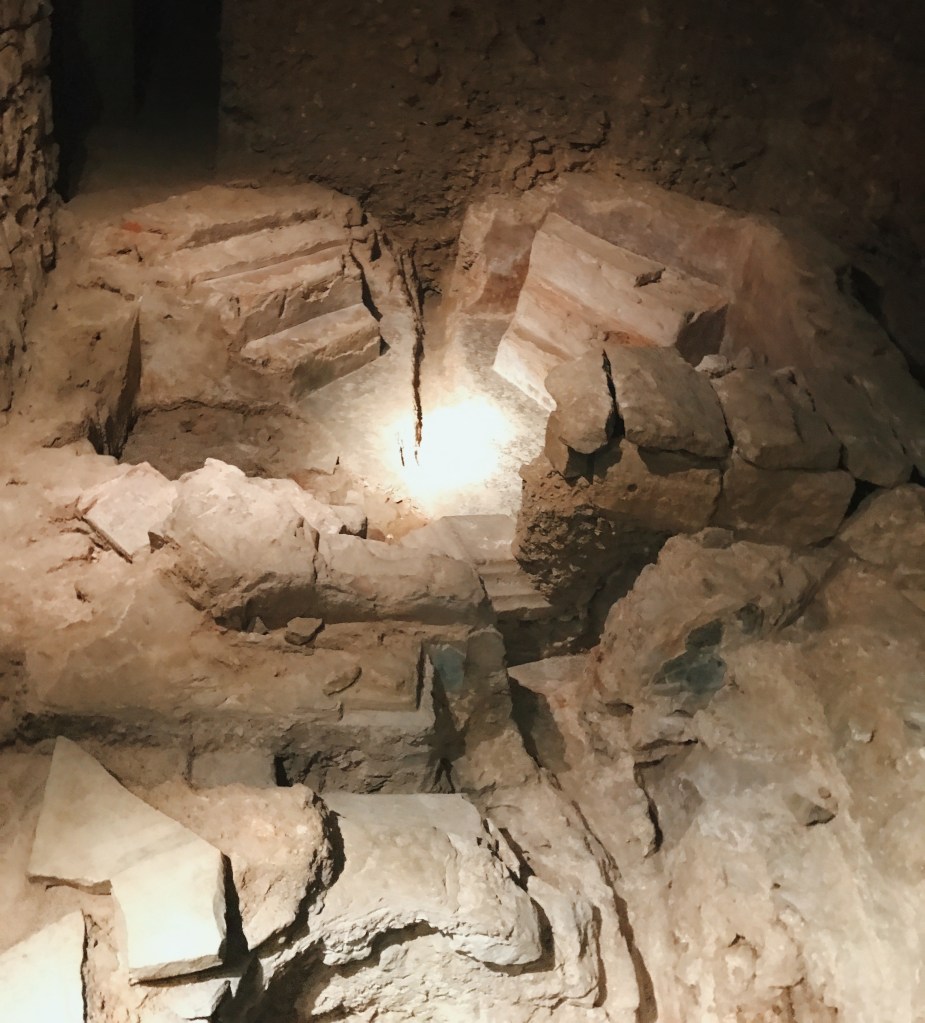
Visigothic baptism pool 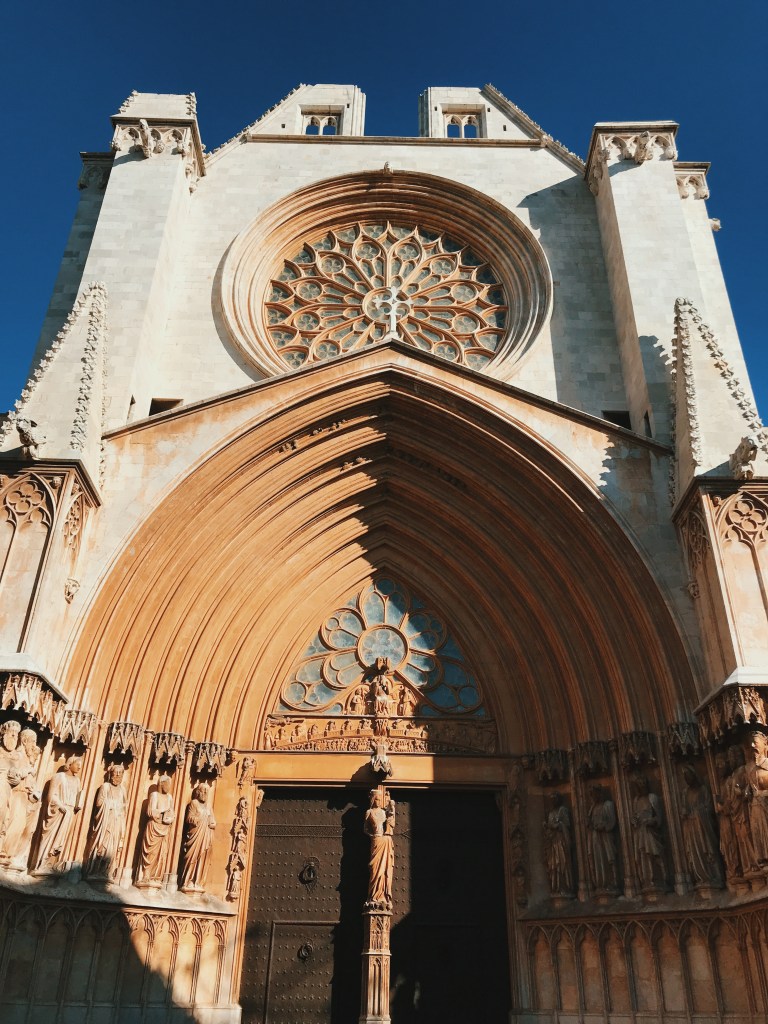
Tarragona Cathedral
 Madison's Catalan Culture Experience