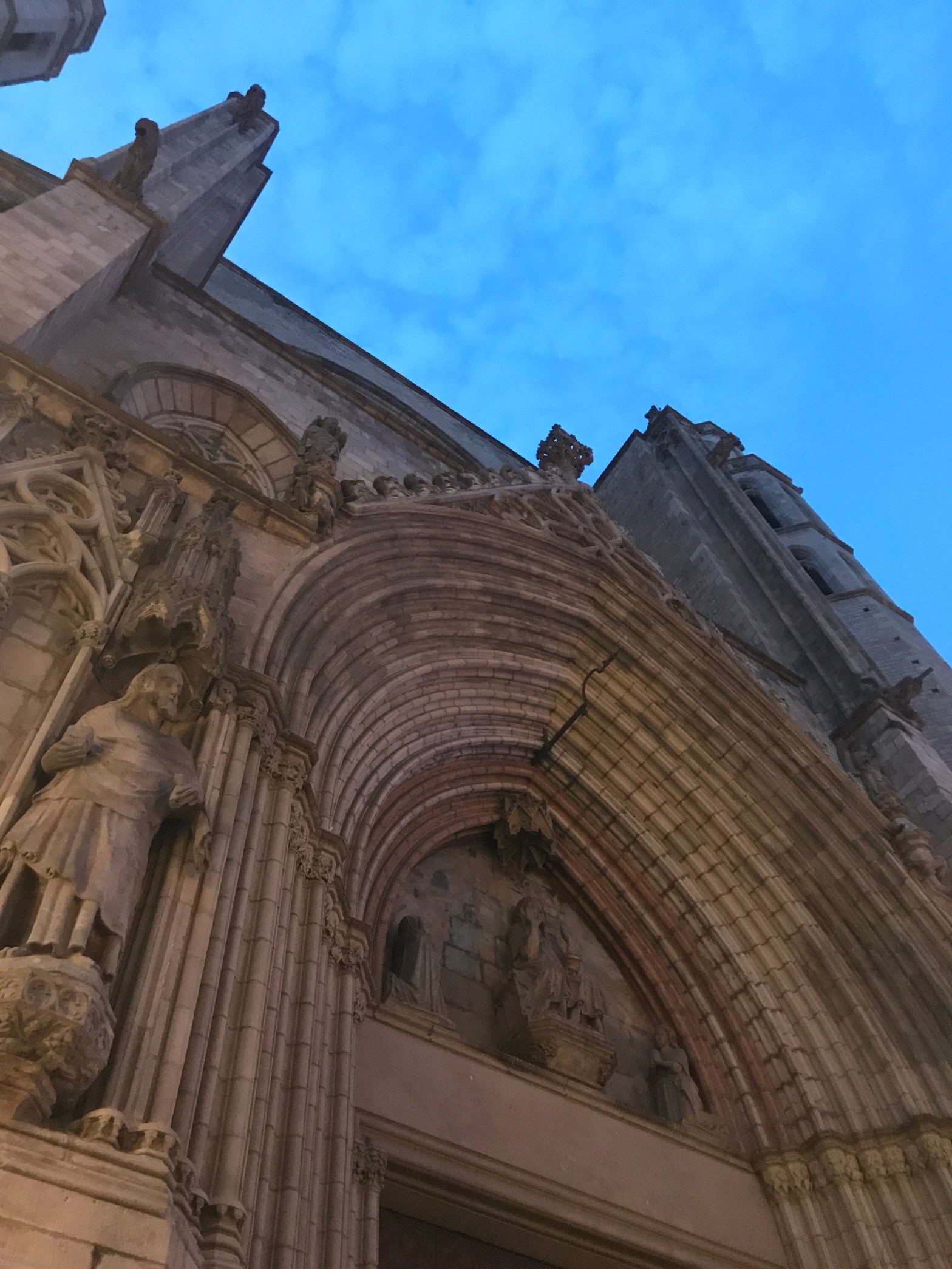
Els Gremis, the guilds, were organizations of artisans and merchants who oversaw their trade or practice. During the medieval era, the guilds were the core of Barcelona’s economics and provided community for the people. The guilds were used to fix prices, provide quality control on goods, and determine the rights of guild workers. Els Gremis aided with organization, in Barcelona, by helping write city laws and offering defense in times of distress. As we walked through the streets of the Ribera Quarter, the legacy of Els Gremis was easy to see as it remained in the present-day street names. Some of the streets we came across were Carrer de Semoleres, Placa de LLana, Carrer de Corders, Carrer de Candeles, and Carrer de Cottoners. Carrer de Semoleres was the guild of the “pasta makers,” and still is lined by bakeries today. Placa de LLana, the street of “woolmakers” played a crucial role during the trade era. The Placa de Llana was were the stock exchange for wool was established. Prices for wool were determined by quantity and demand, and the exchange was a big force in the guilds fixing prices. Carrer de Corders (Rope spinners), Carrer de Candeles (Candle makers), and Carrer de Cottoners (Cotton Weavers) were all guilds focused on craftsmanship and represented the small production of Barcelona before oil arrived. At the front of each of the guilds, there was a dedicated Saint to protect it. We were able to see one of these Saints on the “Placa de Santa Catarina.”
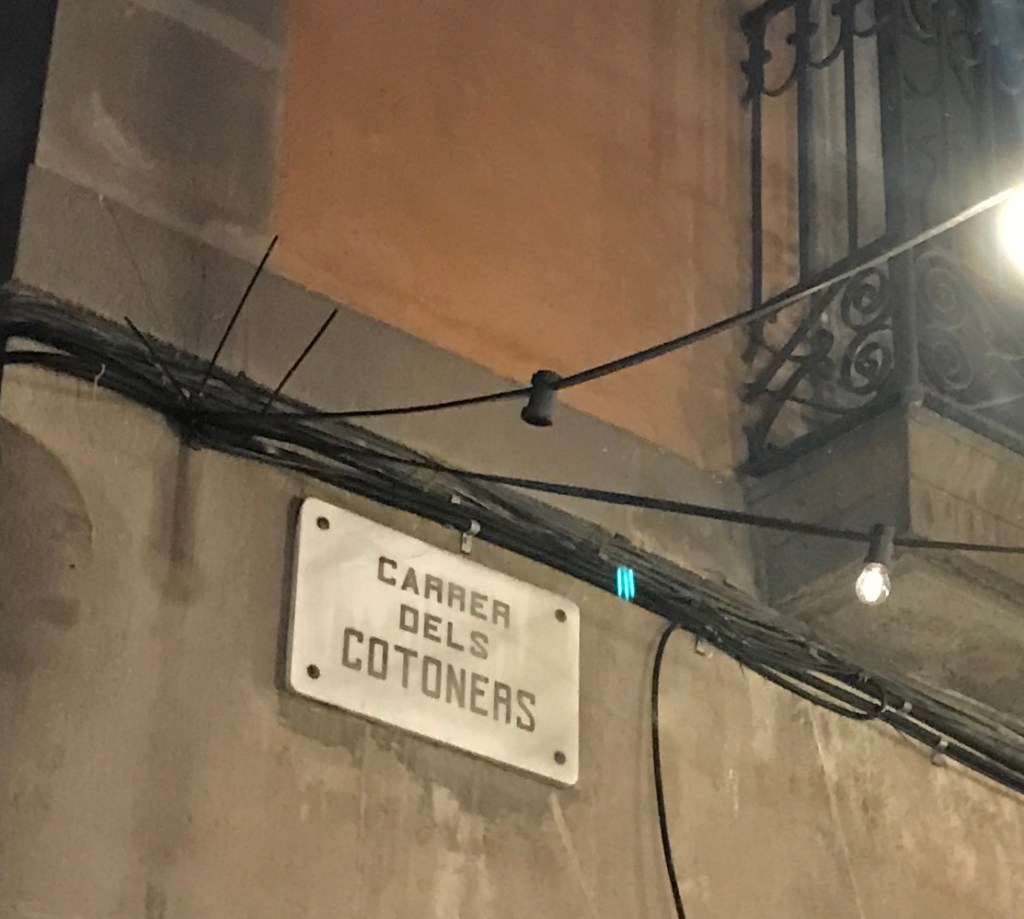
Carrer de Cotoners- “Cotton Weavers” 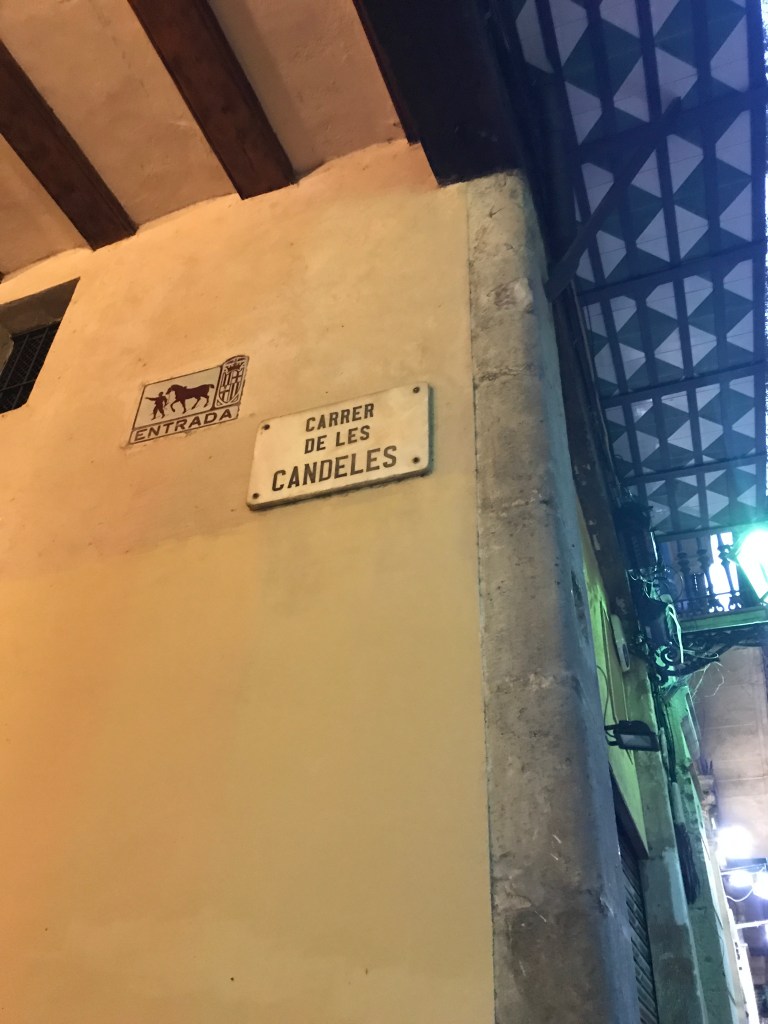
Carrer De Les Candeles- “Candle Makers” 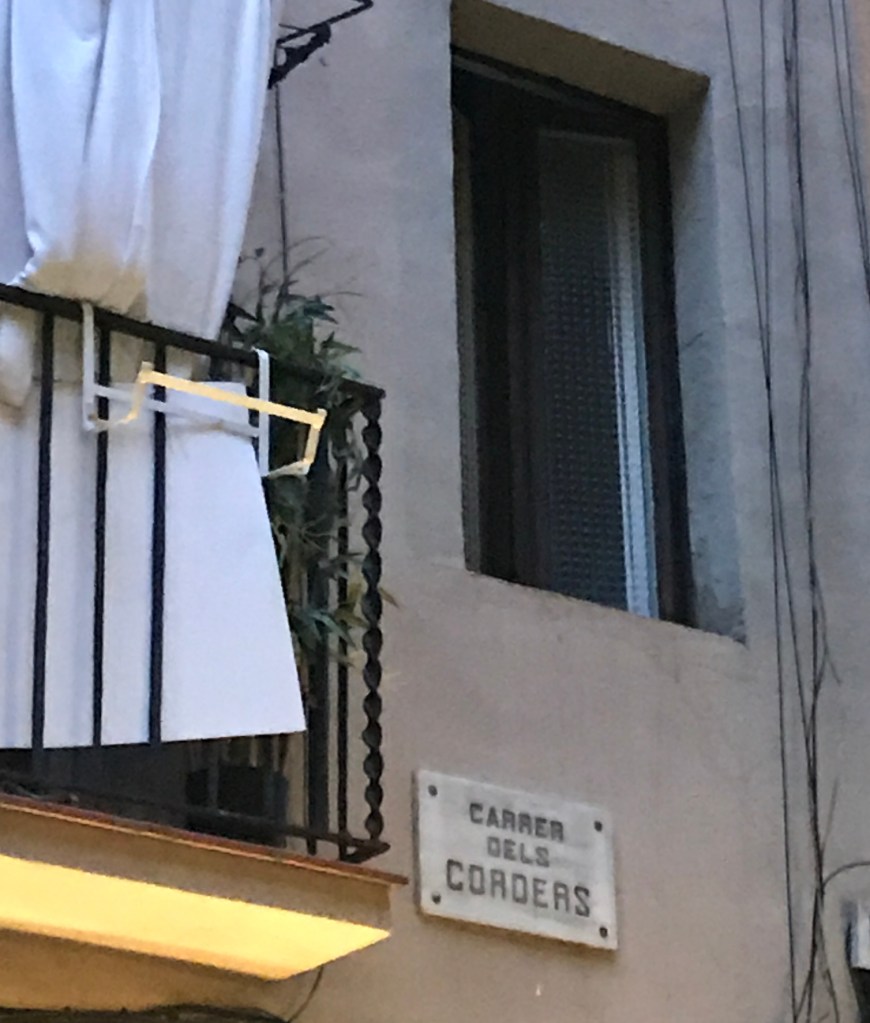
Carrer de Corders- “Rope Spinners” 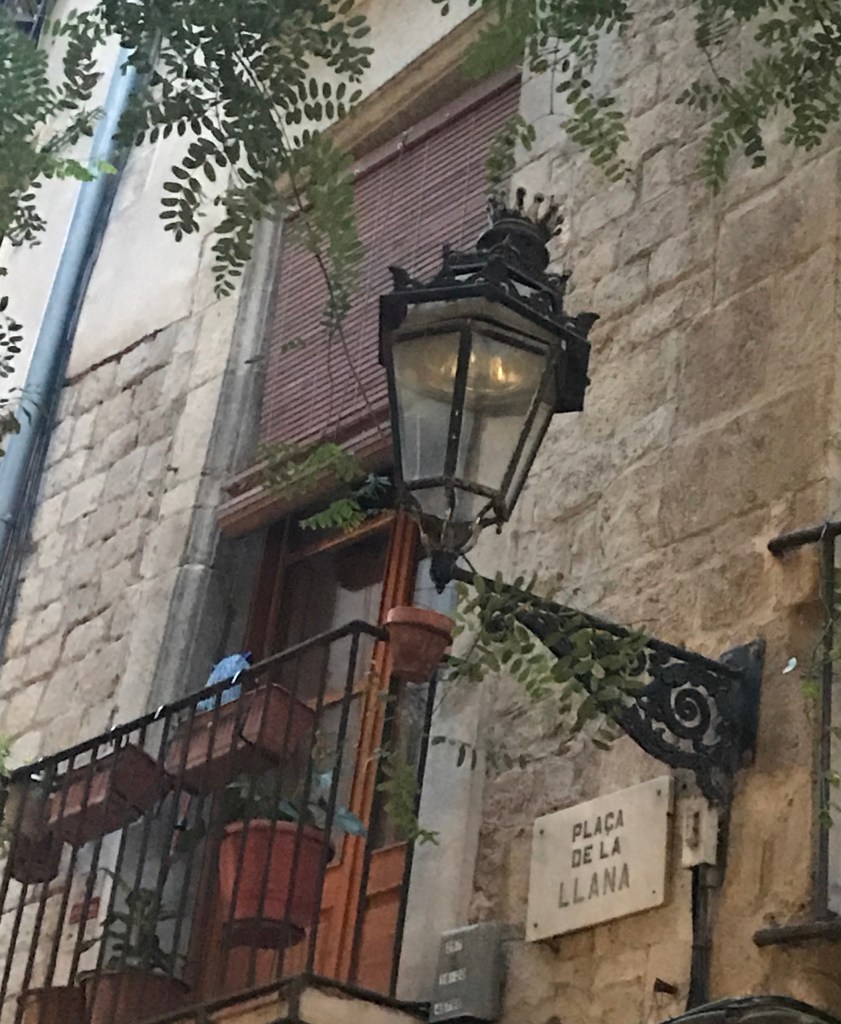
Placa De La Llana- “Wool makers” 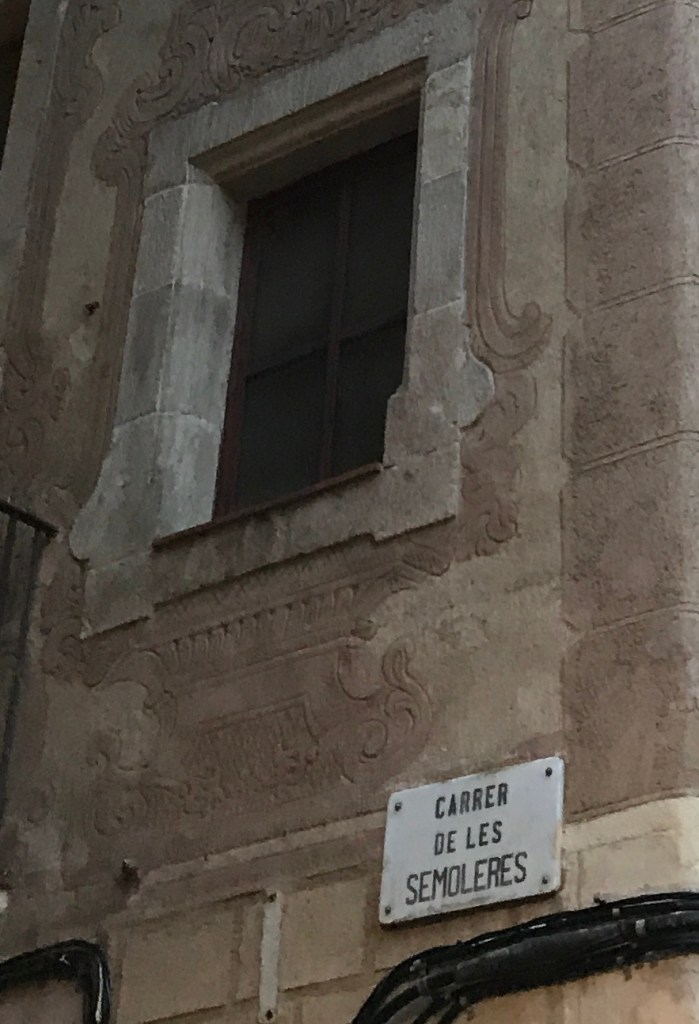
Carrer De Les Semoleres-“Pasta Makers” 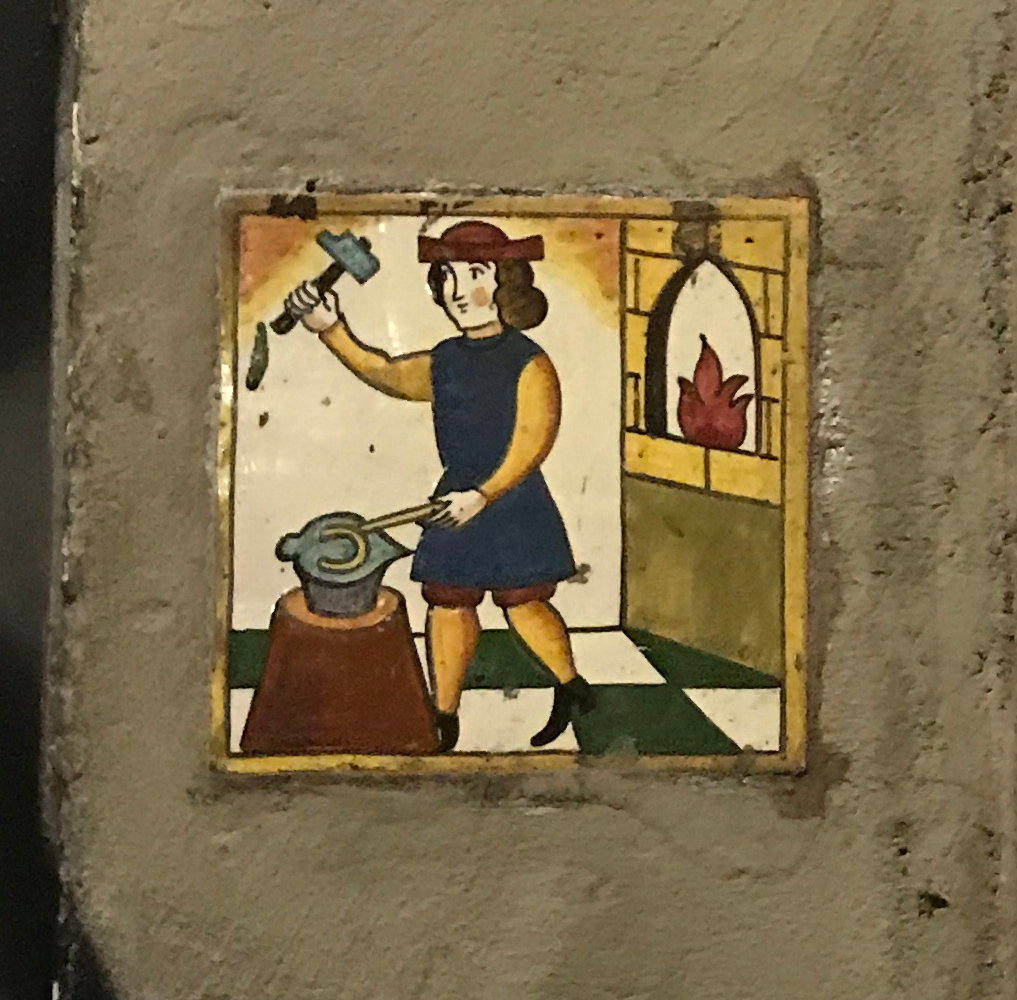
Guild shield 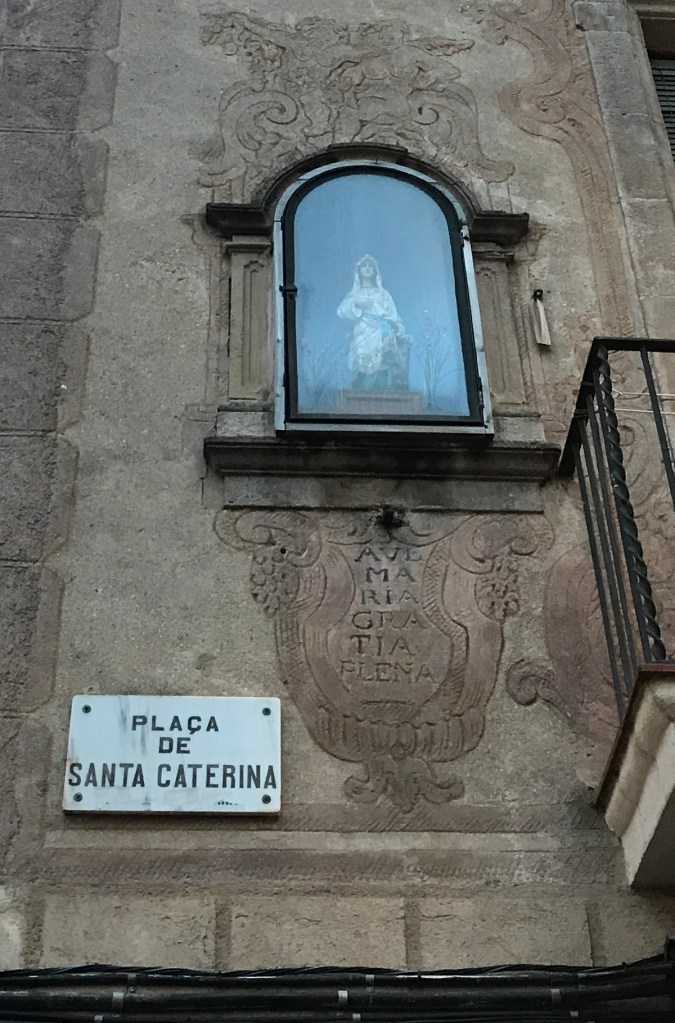
Placa de Santa Caterina
During our tour of the Ribera Quarter, we were surrounded by the typical craftsmanship family house, “La casa-taller.” The space was organized with a small workshop at the bottom of the building with narrow stairs leading to rooms on each floor. Each room had a window, the principal floor having a larger window than all the rest. The principal floor was usually occupied by the workshop owner because of the coveted high ceilings and natural light. The higher floors were occupied by the lower workers of the connected workshop. All of the rooms were small in comparison to modern architecture due to the amount of time spent outdoors. During the medieval times in Barcelona, the workers of the guilds spent most of their time either in the workshops or outside, so they didn’t need large living spaces. The narrow door leading to the rooms led to an even narrower staircase which didn’t allow for movement of large furniture into the building. During the medieval era, hygiene was not as protected as it was during the Roman period. The occupants of the upper rooms in La casa-taller would urinate in small containers and toss it out their windows. Because of the of hygienic practices, it was customary for women to walk closer to the buildings than men to avoid the “splash-zone”. These “La casa-taller” buildings have survived two earthquakes and are still occupied by many people today.
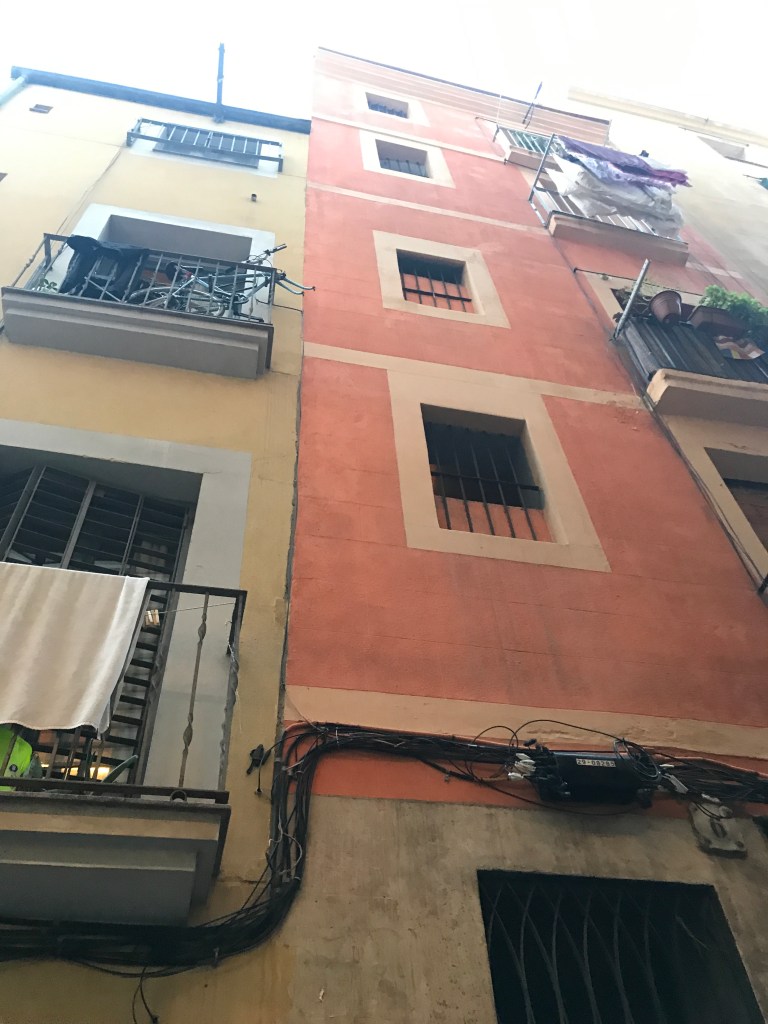
Casa Taller’s Windows 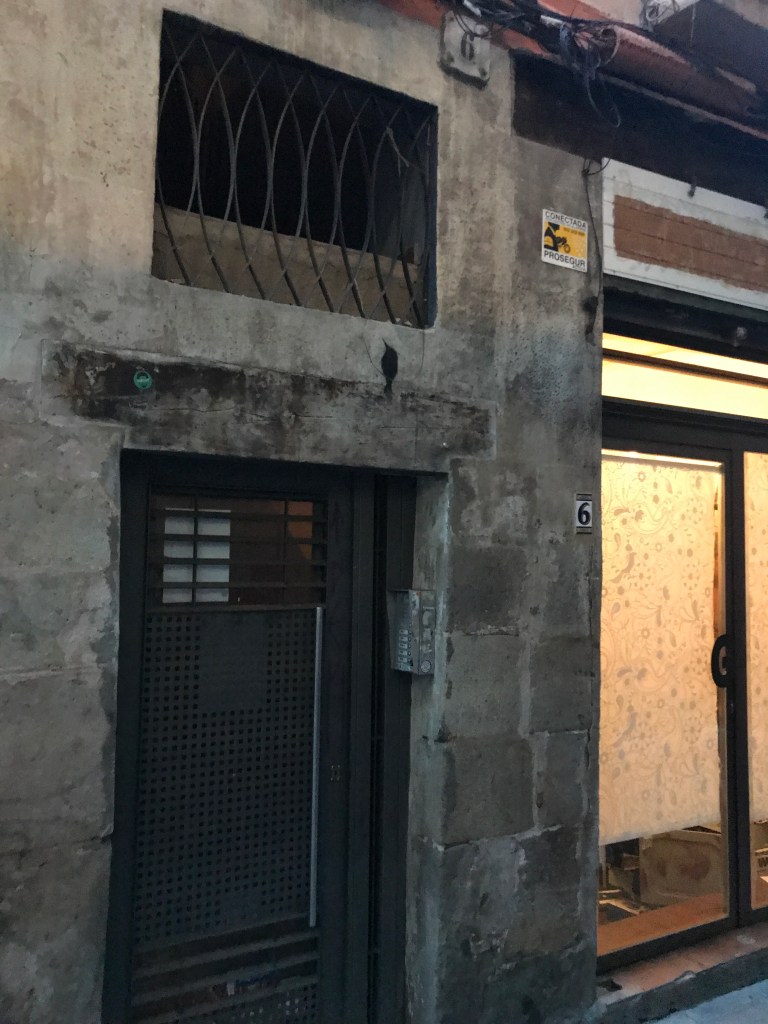
Narrow Doorframe 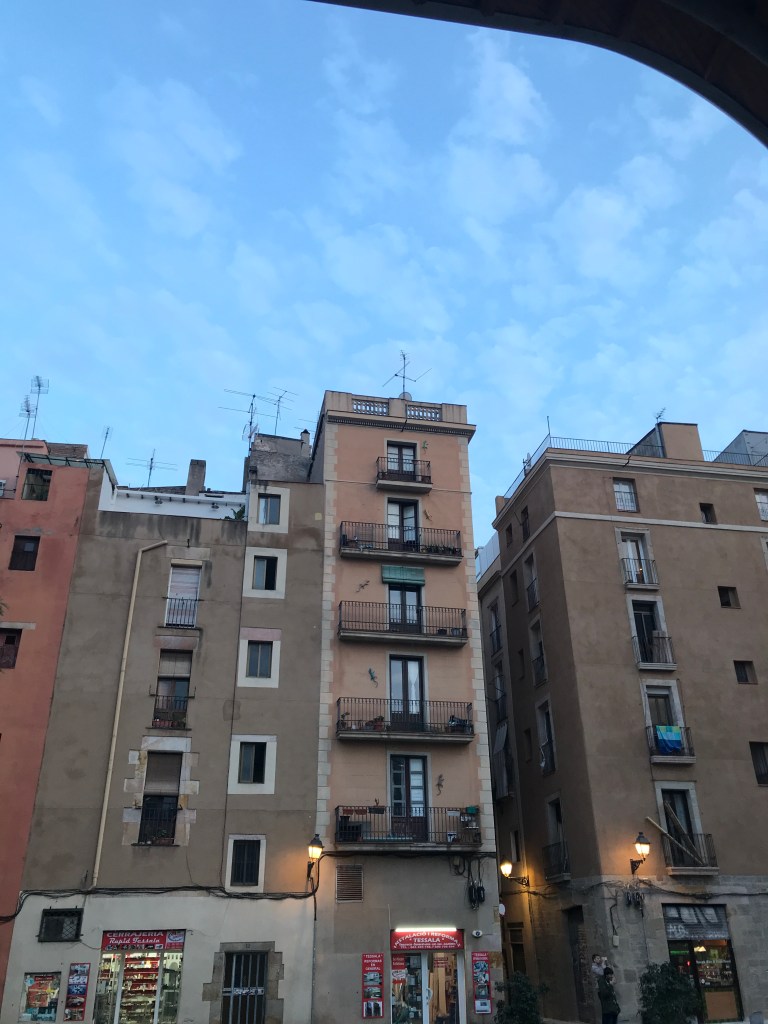
Casa Taller with workshop at the base
The two biggest differences in architectural aspects of craftsmanship buildings and industrial production buildings are the production materials used and the spacing of the buildings. The craftsmanship buildings were constructed with sturdy materials such as stone and wood whereas the industrial buildings were constructed with glass, cast iron, and steel. Industrial buildings were built much quicker because they utilized the mass-produced materials that came about during the industrial revolution. As a result, it is easy to differentiate the eras of construction as you look at the different buildings in el Born. There is also a large difference in spacing between the two types of buildings. The craftsmanship buildings were built on very narrow streets while the Industrial ones were built on much wider ones. The industrial buildings stick out amongst the traditional Catalan architecture and many locals dislike that they were built amongst the craftsmanship buildings.
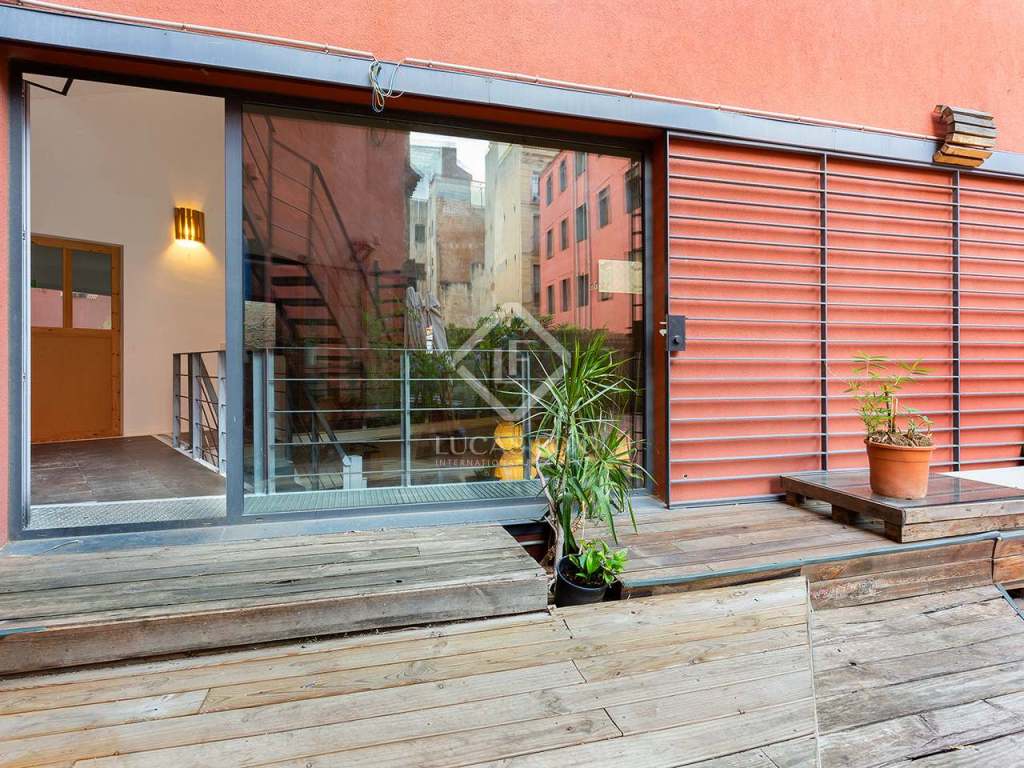
Industrial building in Ribera Quarter 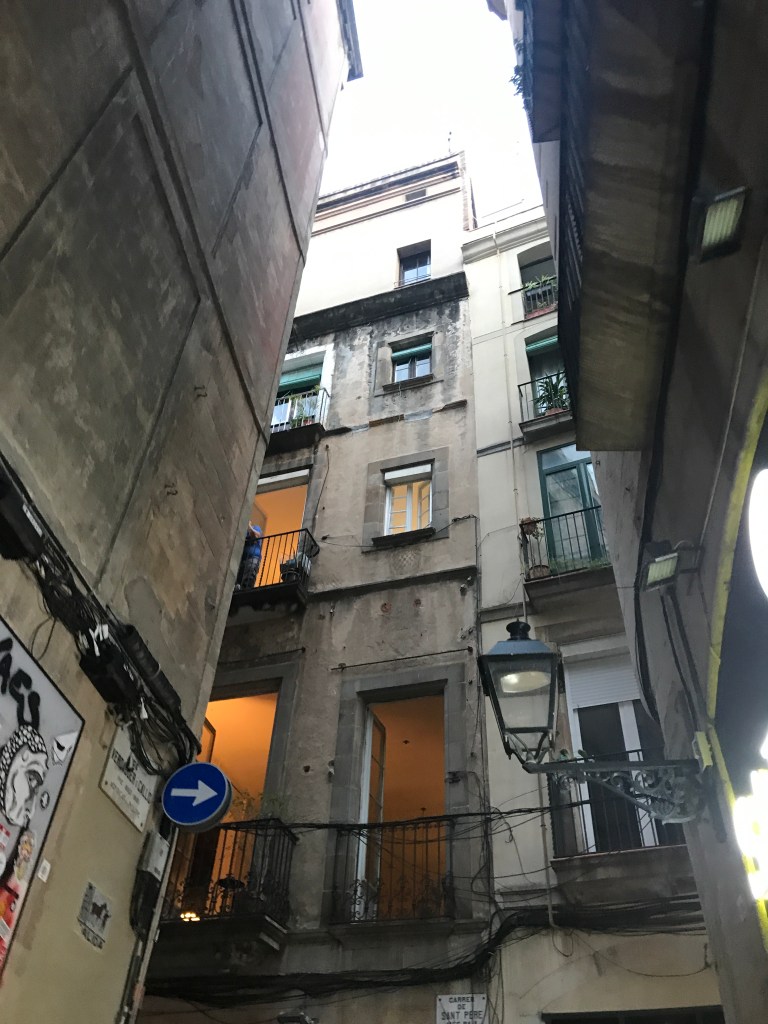
Craftsmanship building in Ribera Quarter
The Santa María del Mar is a church in the Ribera quarter that was built between 1329 and 1383. The church was built over a burial site that dates back to the 1st century A.D, as well as the original church, Santa Maria de les Arenes. The church is a rare example of pure Catalan Gothic architecture because of its simple design and lack of adornment. The Santa María del Mar took 55 years to build and held the reputation of a popular church. It was made for workers, by workers in contrast to the Barcelona Cathedral that was paid for by the King. Constant political and social turmoil led to multiple destructions of the basilica over the years. The most devastating destruction was when the basilica was burned for 11 days straight in 1936, during the Spanish Civil War. The effects of the fire can still be seen on the inside of the basilica where the ceilings are charred. The Basilica was a focal point amongst the guilds and was an important part of Catalan culture because of the people’s personal connection to it. Normal Catalan people get married in Santa Maria del Mar and can be buried inside. We saw multiple tombs of Catalan people, who worked on the Santa Maria del Mar, inside of the basilica. Our visit to the Santa María del Mar was my favorite part of the Ribera Quarter tour. I appreciated the peacefulness and simplicity of the Basilica in contrast to the business of Barcelona.
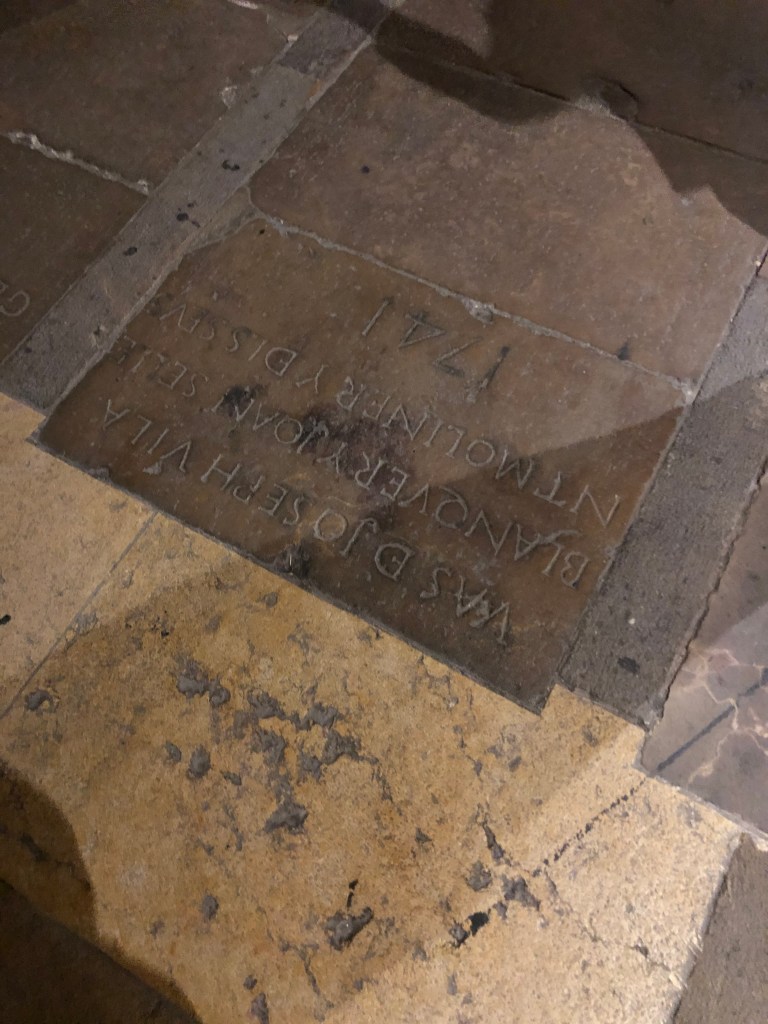
Santa Maria worker’s tomb 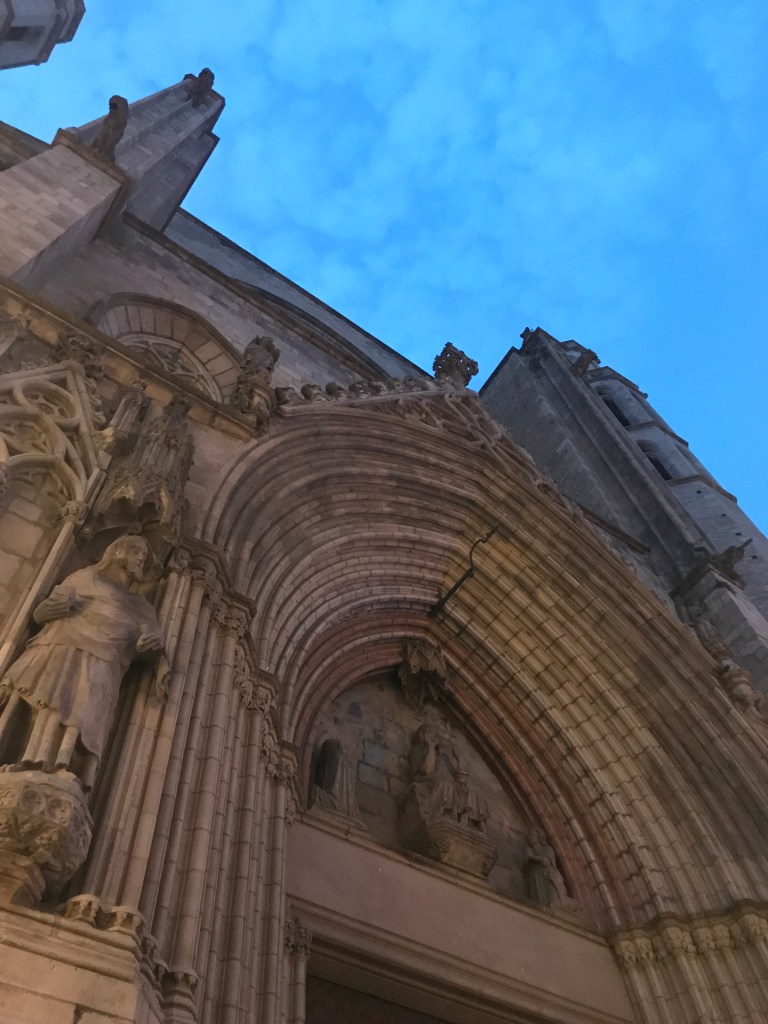
Outside of Santa Maria del Mar 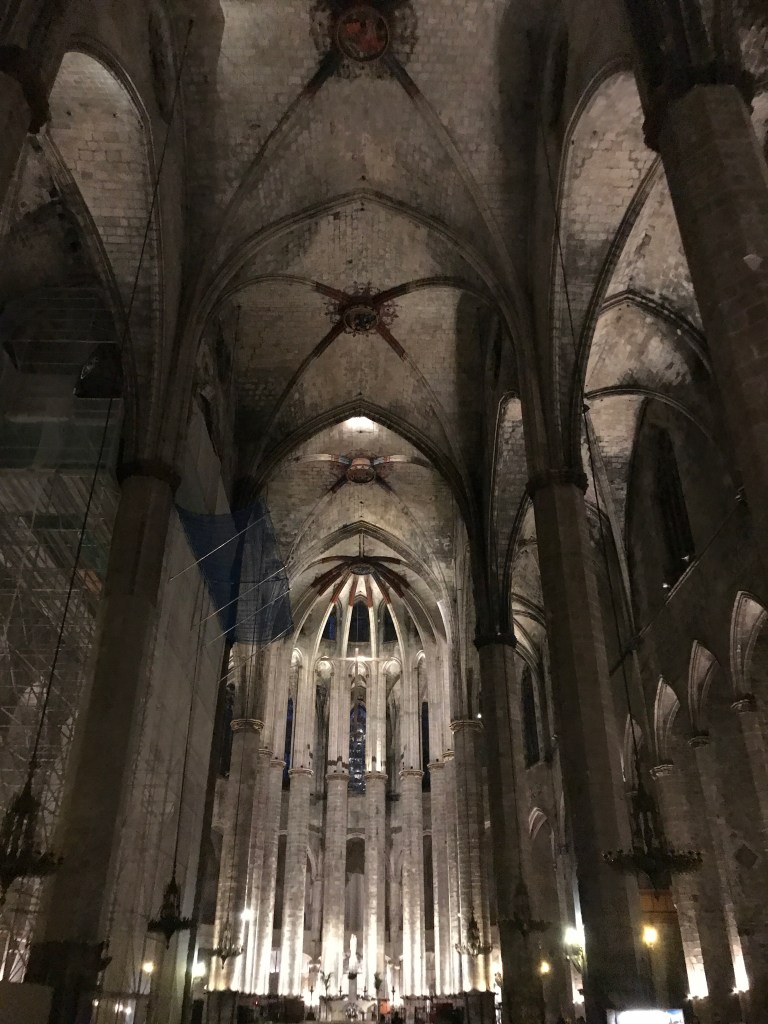
Inside of Santa Maria del Mar
El Mercat del Born was the city’s main market until the 1970s and was built between 1874 and 1876. The market is considered to be the first structure made of iron and glass and is the largest covered square in all of Europe. The construction of this market marked the start of Modernism in Catalan architecture. The ruins of La Ribera neighborhood, after the devastation of the Siege of Barcelona, can be found at Mercat del Born. The market is now home to the Born centre cultural building where you can see the impressive remains of the Ribera streets and houses.
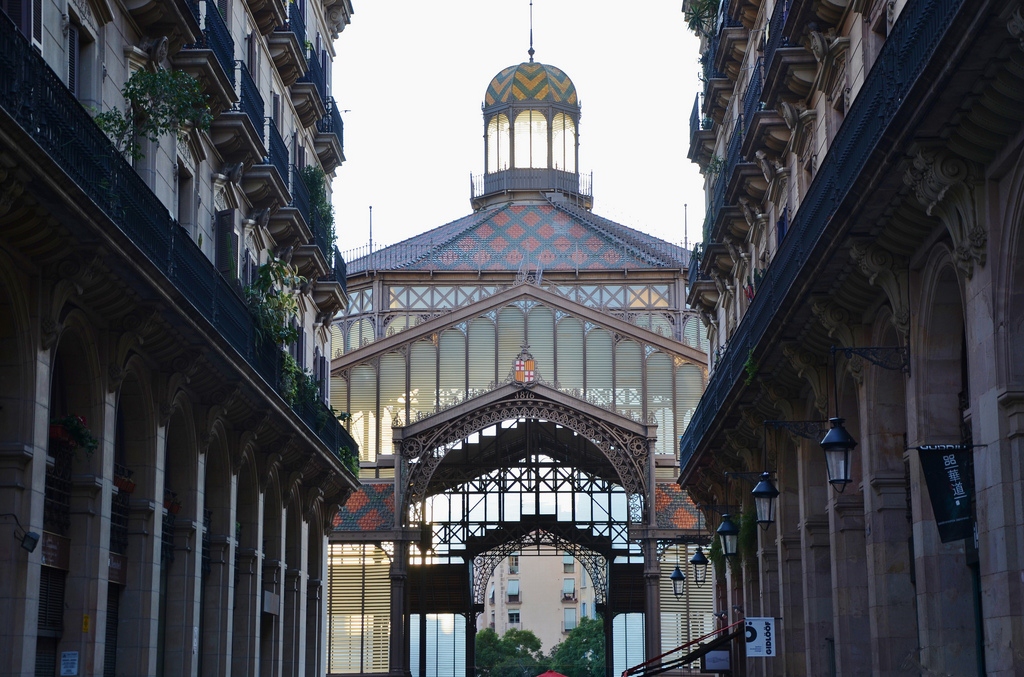
El Mercat del Born 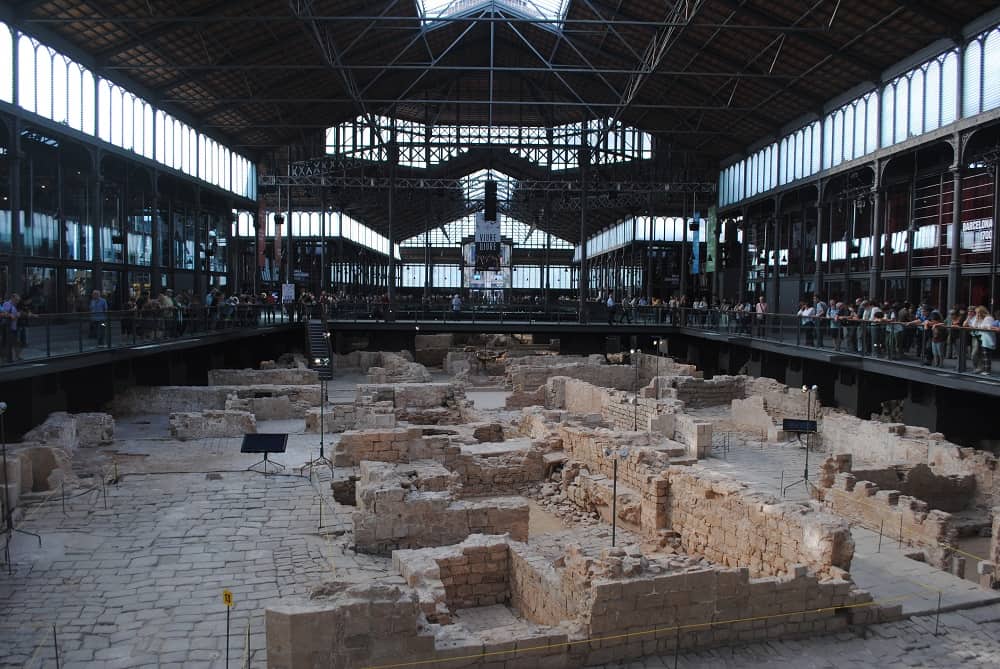
Ruins of La Ribera neighborhood
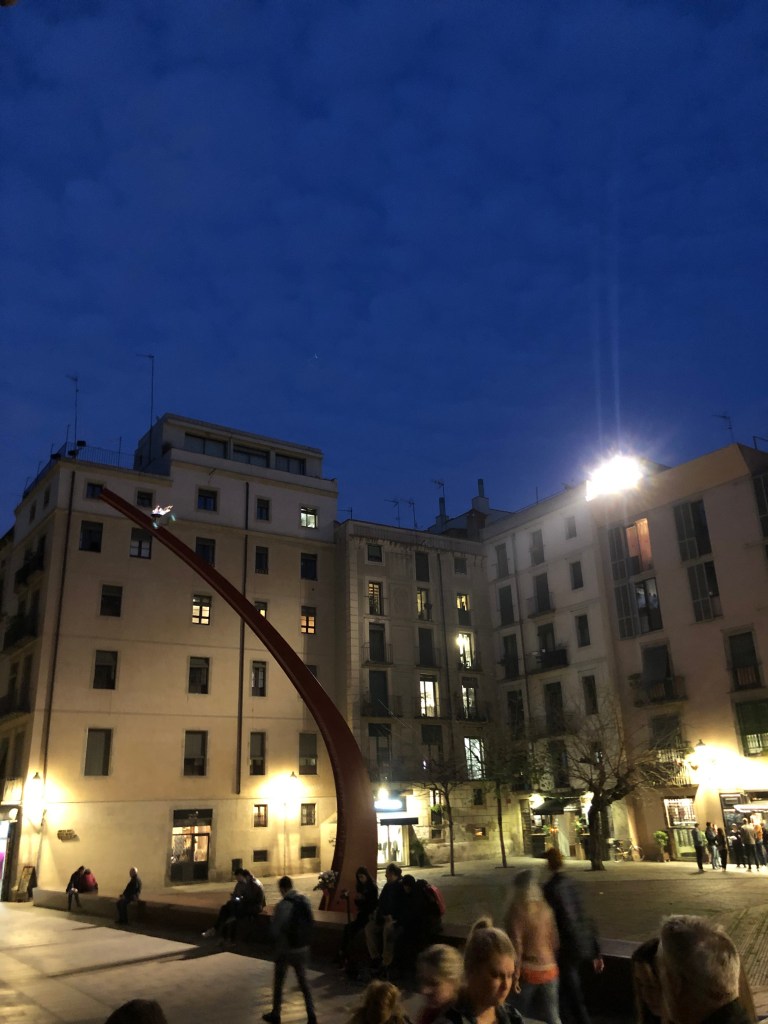
El Fossà de les Moreres is the site of a graveyard for the fallen during the Siege of Barcelona in 1714. Now the site is covered by a monument to serve as a reminder of the fallen troops. September 11th is the National Day of Catalonia, La Diada. On this day in 1714, Barcelona surrendered to the Bourbons and began a period of repression for the Catalans. The burial site, adjacent to Santa Maria del Mar, is now covered by red brick to represent the blood spilled by the fallen. The monument was built, topped by a cauldron with an eternal flame to represent eternal tribute. This monument is a homage to Catalans. At FC Barcelona games, this is held true as fans chant for independence at 17:14.
La Ciutadella Park was built buy Phillip V in order to maintain control over Barcelona after it fell in 1714. At the time, the Citadel was the largest fortress in Europe and required destruction of a substantial part of the Ribera district to have space to build. This destruction left many Catalans homeless. Hundreds of Catalans were forced to help build the fortress creating a long standing resentment towards the Citadel. Today, La Ciutudella Parc is a public park that includes the city zoo, Palau de Parlement de Catalyunya, museums, a pond, and a fountain for everyone to enjoy. I visited this park on my second day in Barcelona and have returned multiple times. It has been very interesting being able to learn the history behind what my first perception of the park.
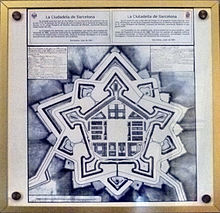
Map of Ciutudella Parc Military Compund 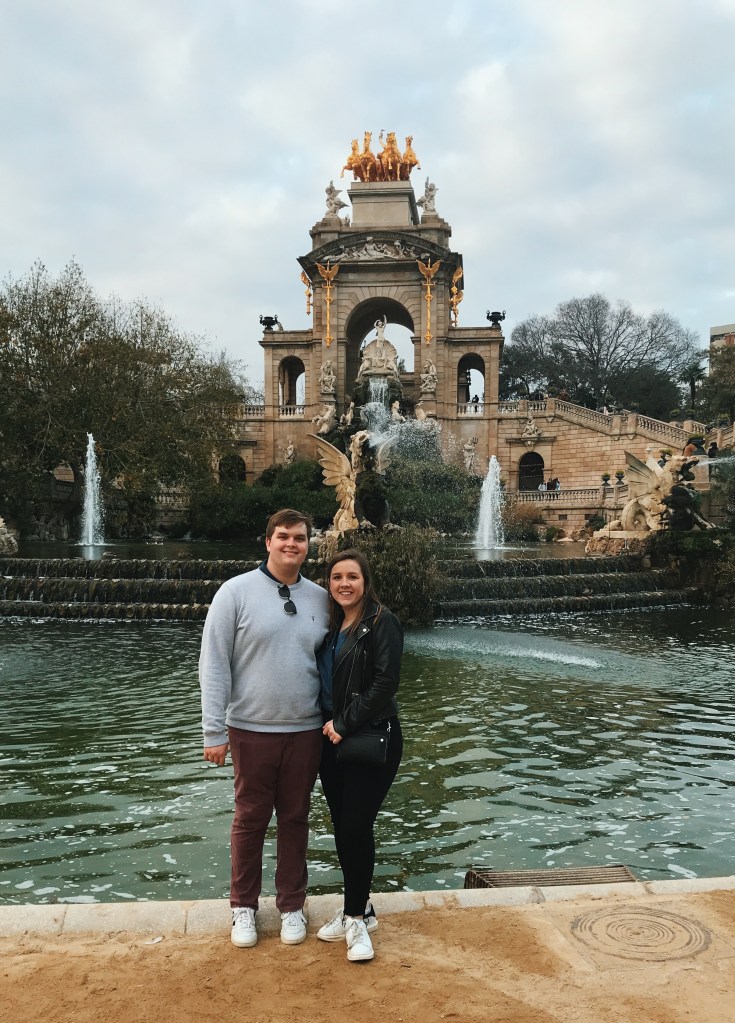
Fountain at Ciutudella Parc
Shortly after the War of Spanish Succession, Philip V abolished all Catalan public rights and Catalan institutions via the decree known as the Decret de Nova Planta. Despite the fall of Catalunya to Phillip V during the siege of Barcelona, September 11th remains the National Day of Cataluyna. The decree of Nova planta suppressed the Catalan charter, forcing Catalans to follow the laws of the Spanish crown. These changes to Cataluyna left their mark on the region as many people still have an issue with the loss of autonomy today.
The Consolat de Mar was a quasi-judicial body set up in the Crown of Aragon to administer maritime and commercial law like regulating the prices of incoming goods. The Consolat de Mar held seats in La LLotja during its time. La Llotja, originally was a seaside exchange market built by Pere Llobetin the 1350’s. It faced the water during that time because that is where most business came from. It was flooded and rebuilt in between 1380-1392. During the 19th century it was home to the School of fine arts and Picasso studied there during 1895-1897. All of its purposes are linked to trade and seafaring life. Currently it serves as the corporate headquarters of the Barcelona Chamber of Commerce and hosts events such as presentations, lunches and galas. Now it is a free standing Neo-classical shell built in 1802 with a single big arcaded room, with a flat beamed ceiling and a viewer’s gallery at half height, the roof carried on three double bays of diaphragm arches that spring from pipe cluster gothic pillars. The contract room is the oldest continuously operating stock exchange in Europe.
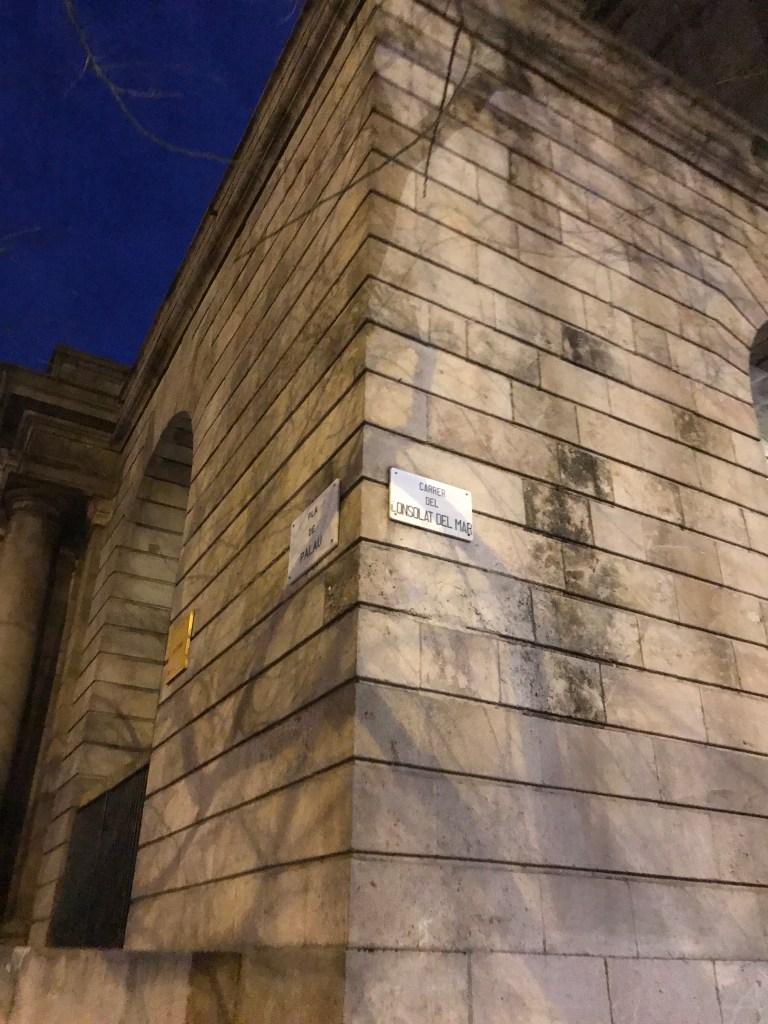
Consolat de Mar 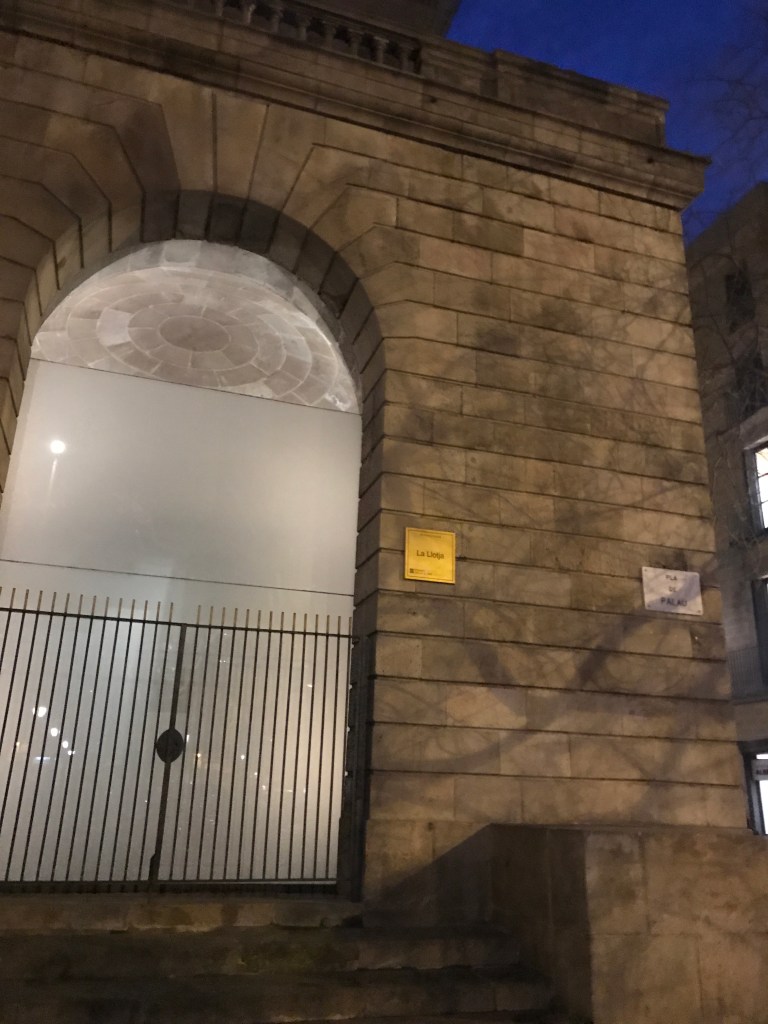
La Llotja
 Madison's Catalan Culture Experience