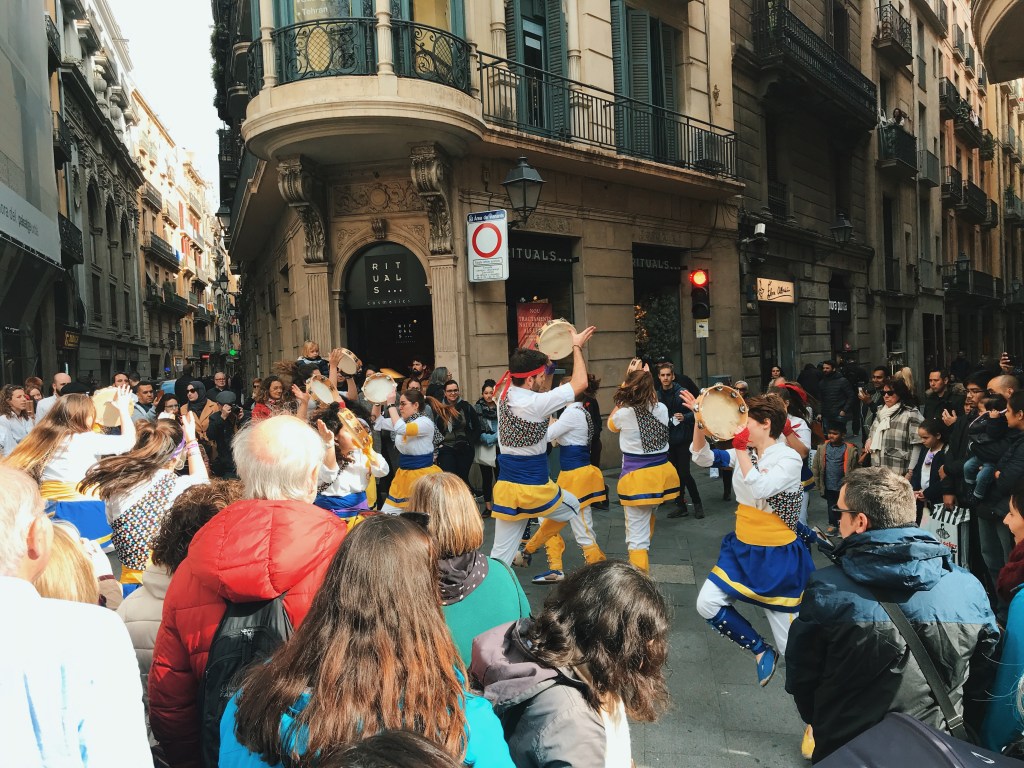
The above photo represents Catalan culture to me because of the pride and excitement I felt amongst the crowd, when I was watching the dance performance. I was walking through the streets when I ran into these dancers, at the festival of Saint Eulalia. Locals surrounded the dancers, clapping and some people even joining in the dancing. The dance they performed is called the Sardana, the traditional national dance of Catalonia. The Catalan dance is a symbol of Catalan unity and pride. The dancers joined their hands together and danced in circles with small precise steps. They were accompanied by a small group of musicians with brass instruments. Along with the Sardana, different dances were performed with tambourines. The Catalans are a proud and patriotic people with distinct traditions and culture that sets them aside from the rest of Spain, and this pride and culture was clearly portrayed through their dancing.
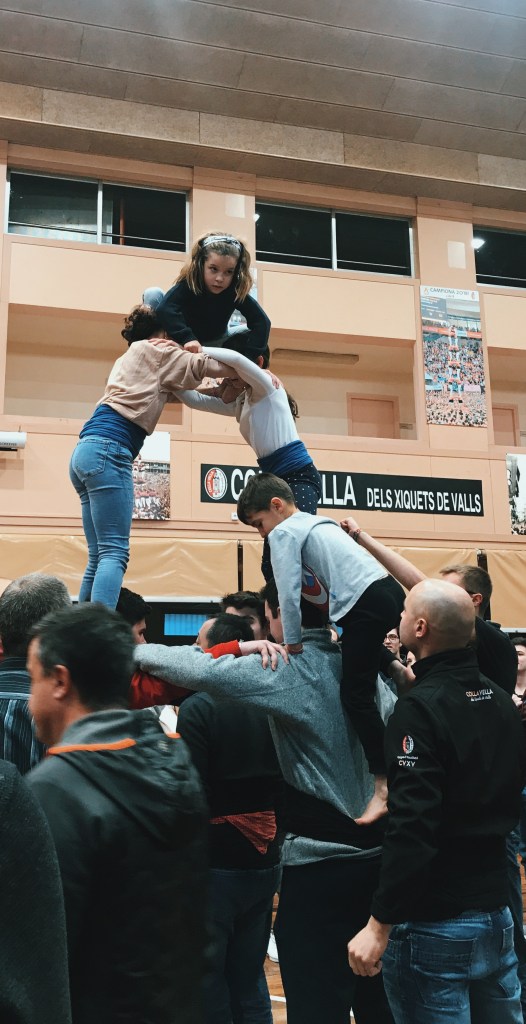
I chose this photo because human towers, represent solidarity and team spirit among Catalan people. My first experience of watching a team of “castelleres” forming a tower was amazing, and something I was always on the lookout for in Barcelona. The sport of building human towers starts off many cultural activities and festivals. People in Catalonia started to build “castells” in the early 18 century and they became popular in Catalonia in the 19th century. In recent years, with Catalan nationalism, human towers are more popular than ever before. The towers represent Catalan culture’s ability to adapt, bringing together tradition and modern practices. Having the opportunity to build a human tower in Tarragona, the home of the tradition, helped me realize that the build is less about the tower and more about the teamwork and what the success of the build symbolizes. The human towers are a visual way to represent participants’ pride in Catalan culture.
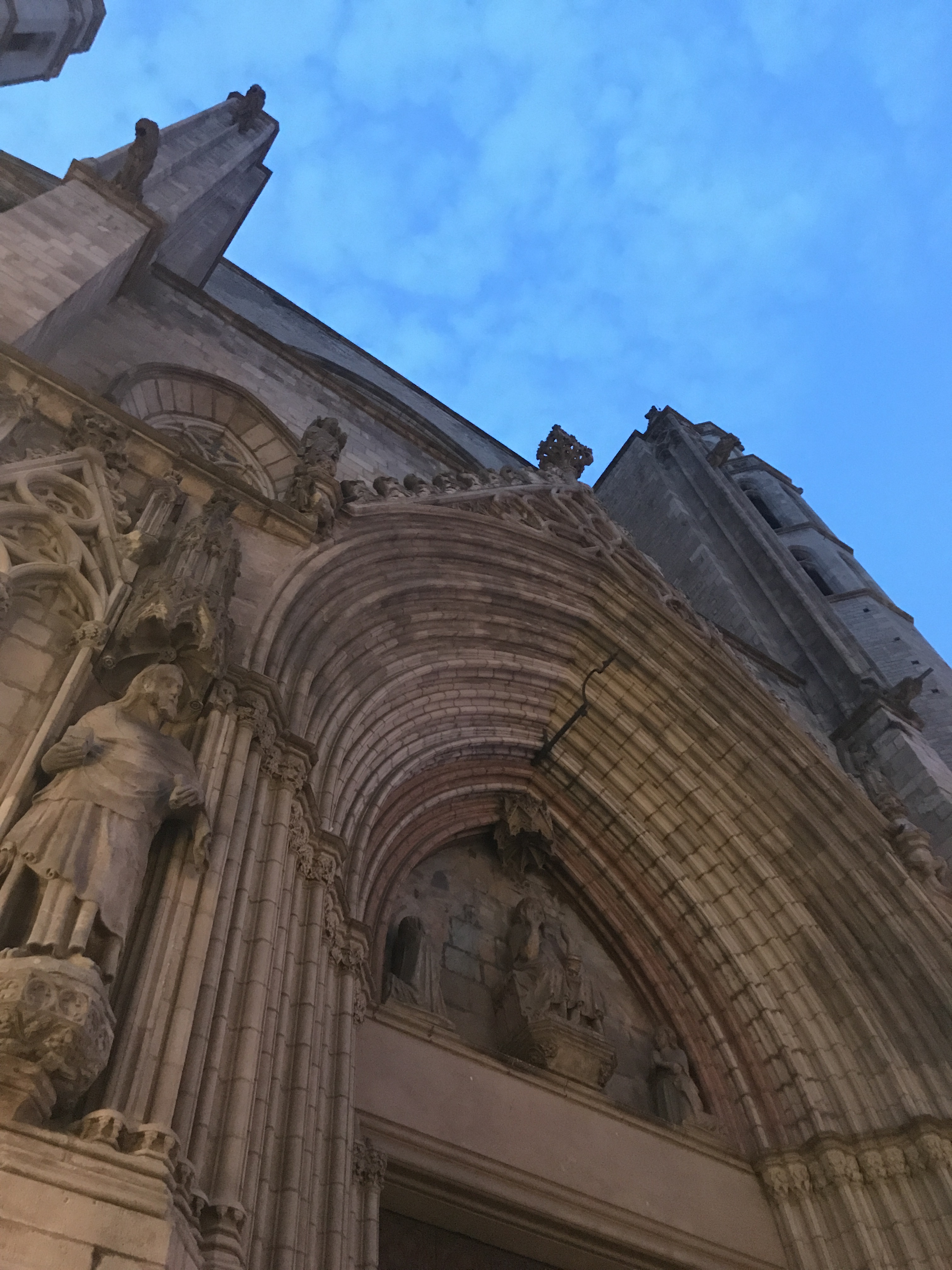
While religion does play a large part of Catalan culture, I didn’t choose this photo for its religious representation. The photo above of Santa Maria del Mar symbolizes Catalan culture to me because it was built “made for workers, by workers,” unlike the Cathedral of Barcelona. During my time in Barcelona, a lot of my professors spoke about the pride Catalans have in their work ethic and commitment. When I was thinking of a way to represent these Catalan traits, I couldn’t help but think of the Santa Maria del Mar. The church was built by hard working citizens and continues to be the people’s cathedral today. Normal, hard-working people attend mass, get married, and are buried in the Santa Maria del Mar. When I walked into the Cathedral for the first time, I was overwhelmed by its simplicity but grandness all at once. The Cathedral was designed to represent the hard-working people, and I think the popular church is a perfect symbol of Catalan culture.
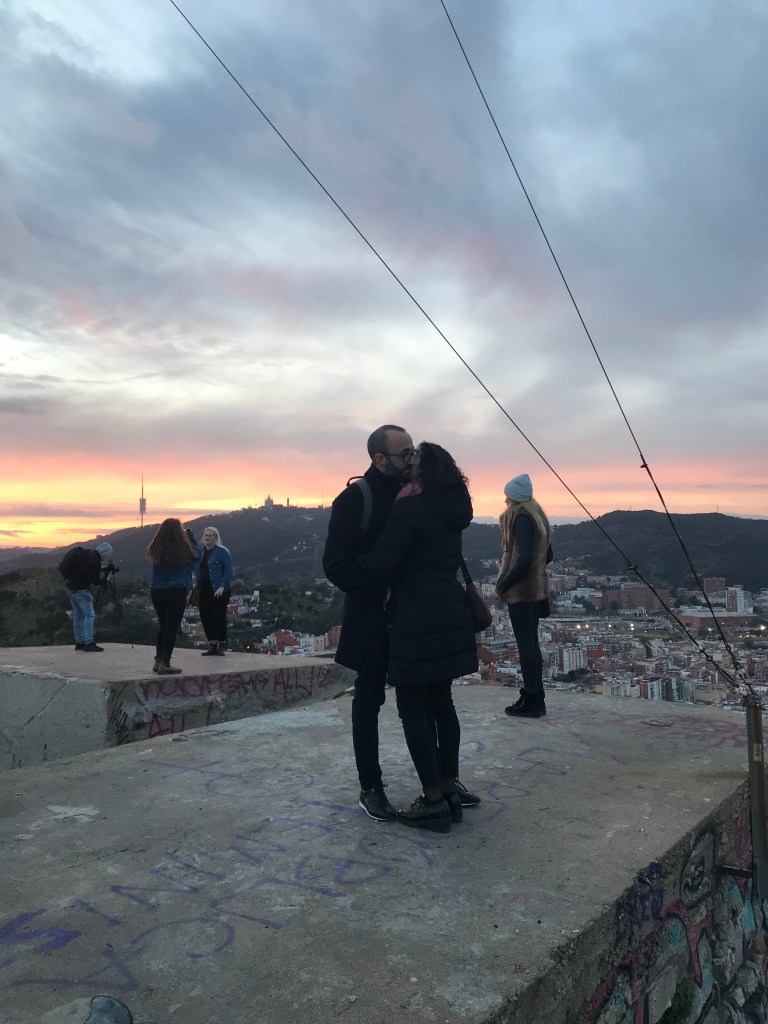
The photo above is one of my favorite photos I took while I was in Barcelona, and it wasn’t even intentional. I was trying to capture a picture of the sunset but accidentally caught an intimate moment between two people. While I thought to delete the photo at first, I decided to keep it because it felt like a perfect symbol of Catalan culture to me. During my time in Barcelona, I noticed a lot of public displays of affection. I was really not used to that, so at first it made me a little uncomfortable. As I learned more about Catalan culture and the importance Catalans put on quality time with loved ones, it started to make me smile when I saw public affection through-out my day. To me, this photo represents the slower speed of the Catalan routine and how Catalans take time out of their day to enjoy the sweet things in life, like affection.
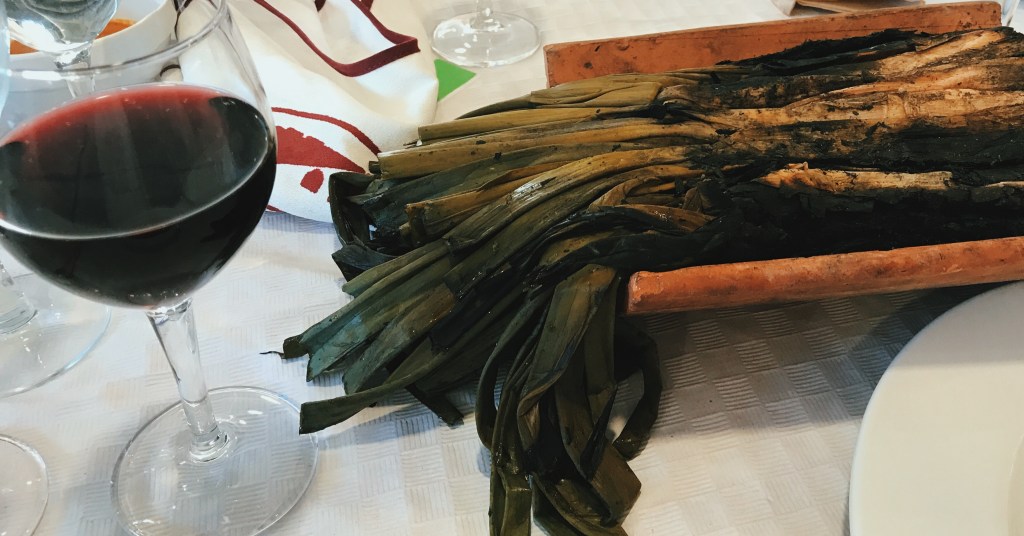
The photo above represents the importance of family, friends, and food in Catalan culture. As I spoke about in my calçots blog post, I enjoyed my first experience trying calçots and would love to attend a calçotada one day. The signal of spring brings friends and families together to celebrate with food and wine. I can imagine feeling the strong culture of Catalonia at these calçotadas like I do at American barbeques on the Fourth of July. I loved hearing my professors mention their own calçotadas and how they would brush them off as a normal weekend event. To me it didn’t seem like a normal event, but family gatherings of this sort are so engrained in Catalan culture that it would surprise my professors when I was curious to know more. Catalan wines and calçots play a large role in keeping family and Catalan traditions alive. Collectivism between families and friends can be seen for generations in Catalan culture.
 Madison's Catalan Culture Experience